Article
What Is Physical AI? 20 Definitions Lead to One Fresh Answer

August 21, 2026 ...
Back in 2008, I asked a simple question that turned out to be surprisingly hard to answer: what is Innovation?
I pulled together 30-plus definitions from The Economist, Peter Drucker, Wikipedia, and dozens of others, and found most of them circling the same two ideas without quite landing on them together. So I proposed a consensus: innovation is fresh thinking that creates value.
Nearly two decades later, the exercise has held up—when a term gets popular fast, the fastest way to cut through the noise isn’t to invent your own definition in isolation. It’s to line up what the most credible sources are already saying, and see where they agree.
There’s a term growing just as fast right now, maybe faster than “innovation” ever did: Physical AI. So I’m doing the same thing here—lining up what the most credible sources are saying, and seeing where they agree.
NVIDIA, IBM, HPE, the International Federation of Robotics, academic researchers, and a wave of robotics startups are all using the phrase. Predictably, they’re not all using the phrase in the exact same way, although there are common themes worth paying attention to.
What I can tell you before we get into the physical AI definitions is this: the work itself isn’t new to us. Fresh has spent years building systems that sense conditions, reason over data, and act back on the physical world, long before “Physical AI” was a phrase anyone searched for. What’s accelerated in just the last year or so is the capability underneath it—faster compute, better models, and new approaches like VLA (more on that below)—which is a big part of why the term is suddenly everywhere.
I’ll come back to what that means. First, let’s see what everyone else means by physical AI.
20 Physical AI definitions
Companies and product makers
Summary: Strip away the branding and every major AI infrastructure and robotics company is saying the same thing—Physical AI is what happens when AI stops describing the world and starts acting in it. That idea went from a single line in an NVIDIA keynote to an industry-wide term to university research initiatives in under two years, which tells you something about how fast this is moving.
- NVIDIA at CES 2025: The speech by NVIDIA CEO Jensen Huang is where this term entered the mainstream. Huang called physical AI “the next frontier,” describing it as AI that can “perceive, reason, plan and act.”
- NVIDIA (Glossary): Physical AI enables autonomous machines to perceive, understand, and perform complex actions in the real, physical world.
- NVIDIA Research: It’s “the engine behind modern robotics, self-driving cars and smart spaces,” built on neural graphics, synthetic data, simulation, and reinforcement learning.
- IBM: AI systems that operate in and interact with the physical world, rather than existing only in software or digital environments.
- Physical Intelligence (π): Bringing general-purpose AI into the physical world by building models that can control any robot to do any task.
- Physical Intelligence (π0 launch): π0 acquires physical intelligence by training on embodied experience from robots, rather than text.
- Archetype AI: “A Physical AI company pioneering a new form of artificial intelligence that is capable of perceiving, understanding, and reasoning about the world.”
- Archetype AI (product page): Its Newton model creates a Physical AI layer for natural conversations with sensors and machines, for insight, prediction, and control.
- HPE: A branch of AI that enables machines to perceive, understand, and interact with the physical world by directly processing sensor and actuator data.
- Encord: AI that perceives, reasons, and acts in the real world through robots, sensors, and actuators, instead of living only in software.
- Niantic Spatial: Best understood as AI that crosses the boundary from software into the real world.
- NVIDIA at Automate 2025 (Deepu Talla keynote): vision-language-action models that guide a robot’s decisions and movements.
- Google DeepMind, via CNBC: will use AI models to power physical robots, joining a wave of labs moving AI models into physical bodies.
- Physical Intelligence, via CNBC: bringing general-purpose AI into the physical world by building large-scale models and algorithms that power robots.
Industry and trade bodies
Summary: Robotics’ own trade bodies don’t treat Physical AI as a new technology at all. They treat it as a shift in how machines get built, from hand-programmed to trained through experience and simulation. The National Robotics Strategy even ties national competitiveness to how fast that shift happens.
- International Federation of Robotics (IFR): “This so-called Physical AI allows robots to train themselves in virtual environments and operate by experience, rather than programming.”
- IFR President Takayuki Ito: Integrating AI into robotics enhances capability, increases efficiency, and improves adaptability as AI transforms the field rapidly.
- Association for Advancing Automation (A3), National Robotics Strategy vision: true global competitiveness requires advancing physical AI applications — namely, robotics.
- A3 (Industry Insights): Physical AI applications bring artificial intelligence out of the digital realm and into the physical world.
Reference and academic sources
Summary: The academic sources are the only ones in this list not content with “perceive, reason, act” as a full answer. They want to know what actually makes intelligence physical in the first place. Embodiment and real-world interaction aren’t just where AI gets deployed. They’re part of what makes it intelligent at all, whether we’re talking about a robot or a data center.
- Vahid Salehi, “Fundamentals of Physical AI”: intelligence as an emergent phenomenon of real interaction between body, environment, and experience.
- Wikipedia: Systems that perceive, reason about, and act within the physical world — overlapping with embodied AI and robotics, but emphasizing the complete process of perceiving, planning, and physically executing a task.
- Academic paper on data-center operations: Integrating AI with physical systems, giving AI the capacity to perceive, understand, and act in the real, physical world.

The consensus—and our definition of Physical AI
Line up all 20 definitions from industry experts and physical AI companies, and the noise mostly cancels out. The meaning of physical AI keeps splitting into ‘robot’ or ‘sensor’ or ‘model,’ depending on who’s using it, but read enough of them back to back and the underlying meaning converges even when the wording doesn’t.
Nearly every physical AI definition describes the same three-part loop:
- Sense the physical world through real signals, not synthetic input
- Reason over that data with AI models rather than fixed rules
- Act back on the physical world
Wikipedia’s version is the most precise about one nuance worth keeping: it’s the complete loop that matters, not any one stage alone. Plenty of software reasons well about the physical world—classifying an image, predicting a failure—without ever closing the loop into action.
That’s AI about the physical world. Physical AI is AI acting in it.
And that’s the consensus. While we align with most of it, here’s the definition we work from, and have for a while:
Physical AI is the discipline of building systems—robots, equipment, or connected products—that sense the physical world through sensors and vision, reason over that data with AI models, and act back on the physical world within parameters or limits.
Three things we’d add, based on doing physical AI work rather than writing about it.
#1: Physical AI is broader than just the robotics industry
A number of the 20 definitions above default to robots as the example, and a couple of trade-body definitions lean on “Physical AI” and “robotics” almost as synonyms, which makes sense since robotics is where most of this work has been proven out first. We’d just add to that: the same sense-reason-act pattern applies to intelligent product development, whenever sensing and edge AI get designed into a product from the start rather than bolted on later.
#2: When it comes to Physical AI, we believe humans belong in the loop or on the loop
Almost none of the 20 definitions mention people, but in our experience, the systems that tend to integrate and work long-term are ones where someone can still understand, trust, and deal with unknown variables. Near term, we expect most automation and autonomous systems will involve a fair amount of human involvement in the loop or on the loop, until machines or robots prove reliable enough not to need it.
#3: The progression of Physical AI will include more human input as autonomy evolves
Part of the value of reasoning over data is enabling robots to work in unstructured environments with real-time inputs, versus the historical, structured environments that single-purpose robots have operated in for the past 40 years. VLA (Vision-Language-Action) models are one of the clearest expressions of that shift. A VLA is a type of artificial intelligence foundation model that takes in camera images and text commands and directly outputs physical movement commands for a robot—real-world data in, real-world action out, in a fairly closed/predictable loop. It’s a common term that captures many of the core elements of Physical AI, though we’re still early in figuring out how to deploy these models effectively at scale.
That’s also part of why Physical AI stays so dependent on people even as it matures. These systems still rely heavily on human-generated data and human data synthesis to learn from in the first place. In the near term, most of the action will still run through people: first humans only, then humans plus robots, then robots monitored by humans. Some work will always require this integration. Other work will progress from humans in the loop, to humans on the loop, to humans out of the loop as that oversight becomes less necessary over time.
Physical AI examples at Fresh
Simulation-trained systems, deployed to the physical world
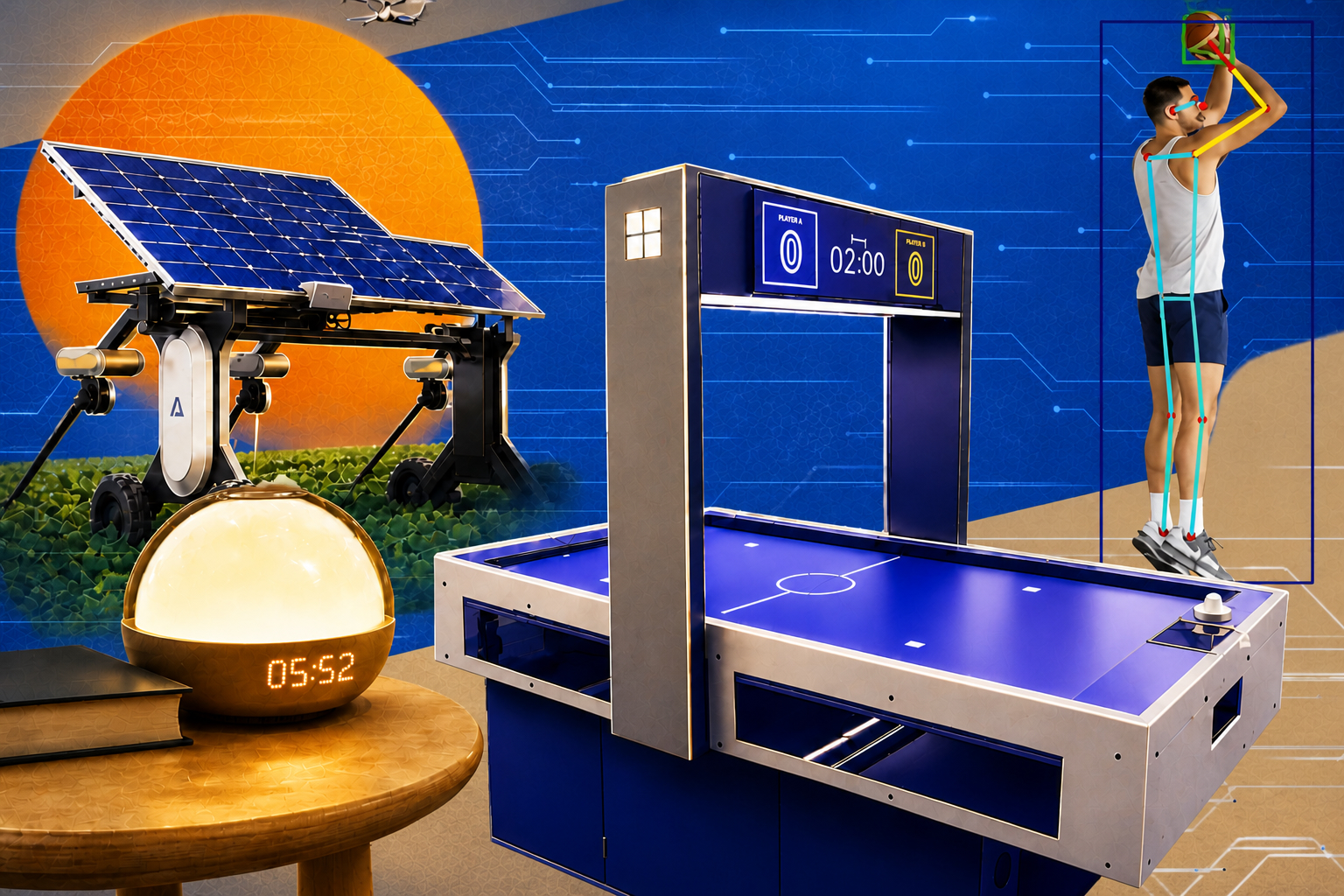
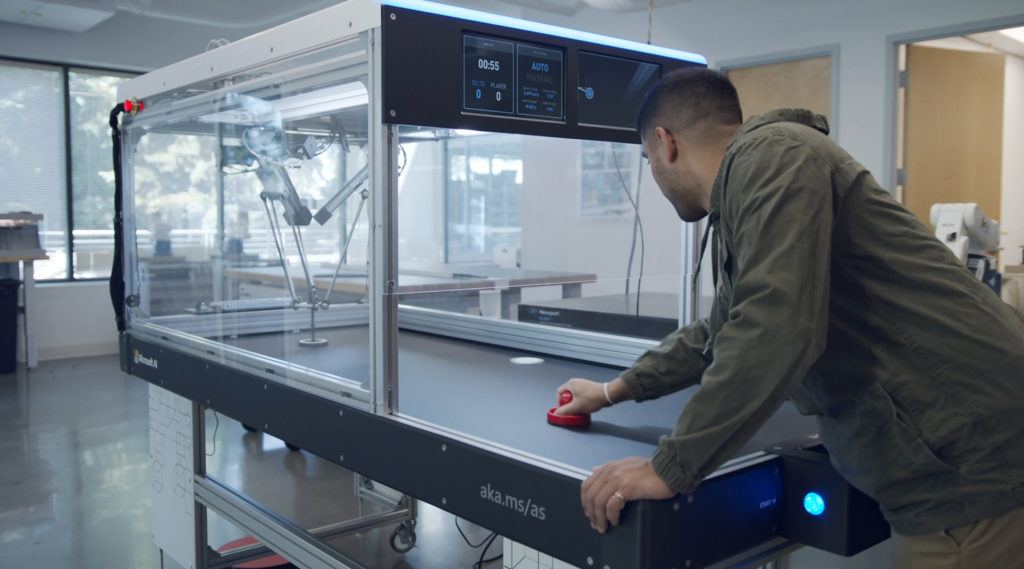
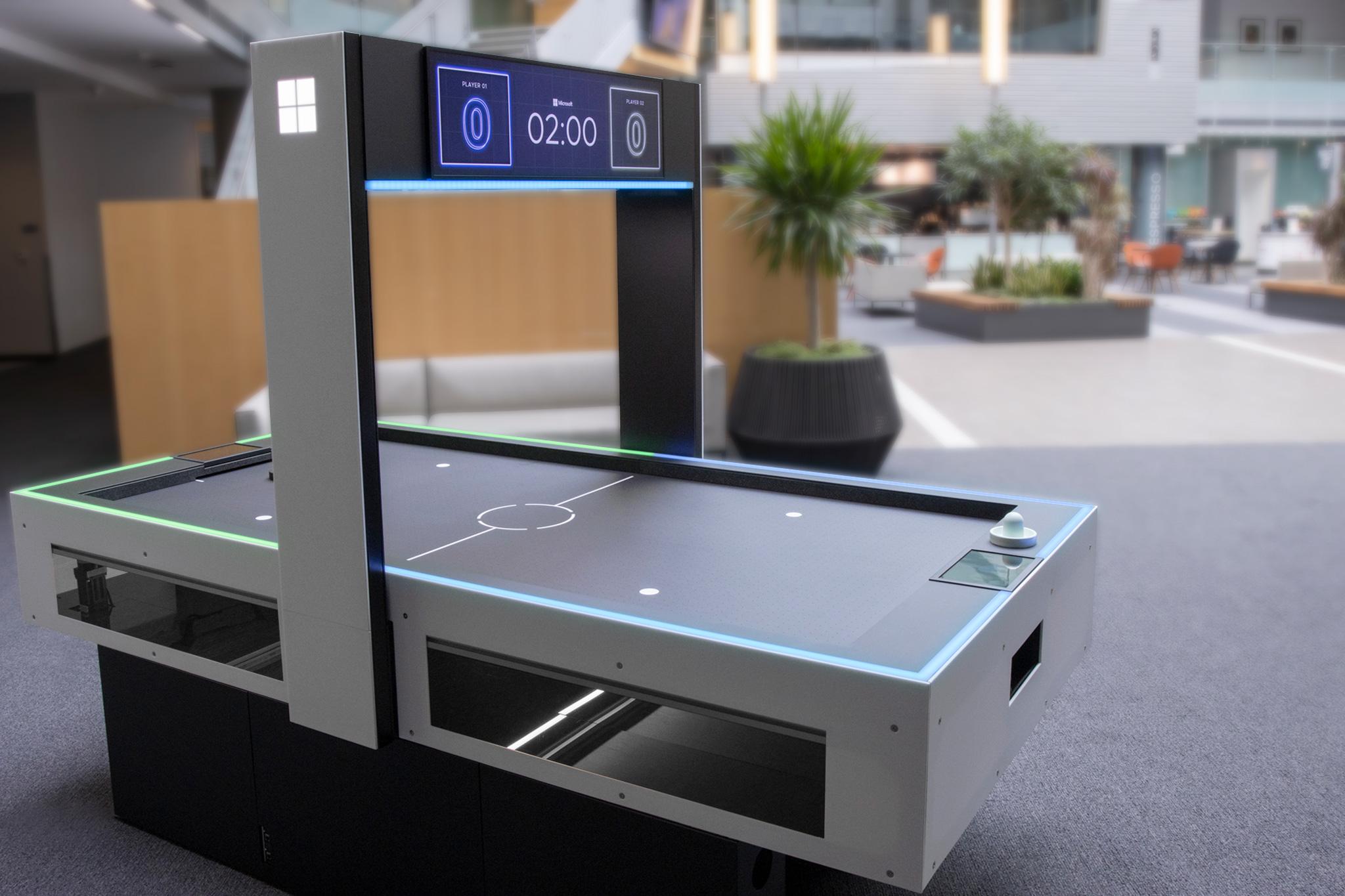
Project Moab—a Red Dot Award-winning product built with Microsoft—is a ball-balancing robot trained entirely in simulation on Project Bonsai. The training is then deployed to a physical bot—reasoning learned in a virtual environment, acting in the real one. We took the same approach further with one of our other physical AI examples: a robotic air hockey table for Microsoft’s Autonomous Systems group, which also won a Red Dot Award for turning simulated AI development into something anyone could physically play against.

Hardware as the foundation for perception
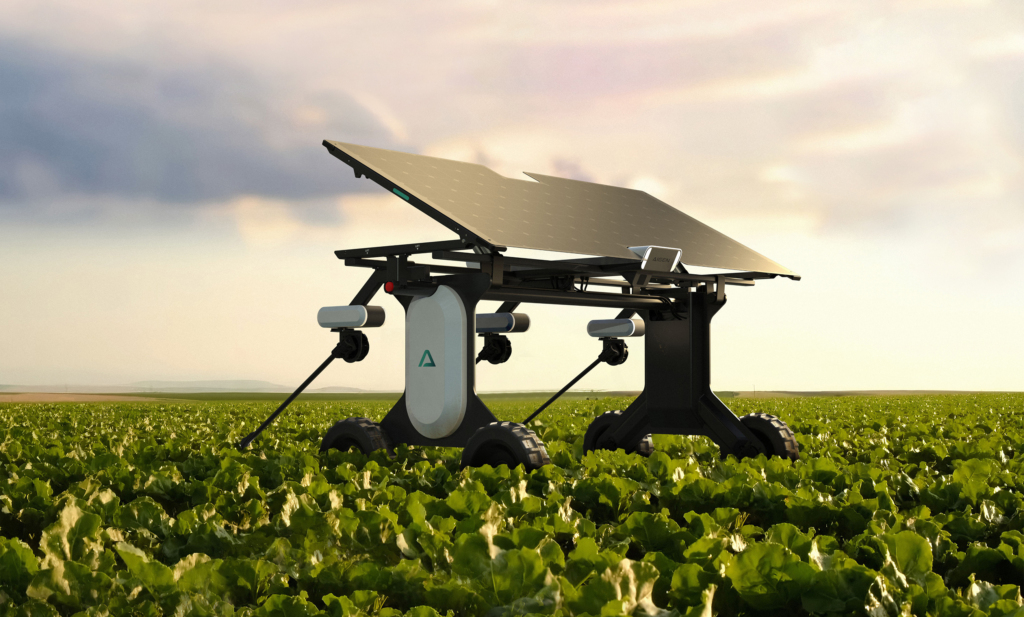
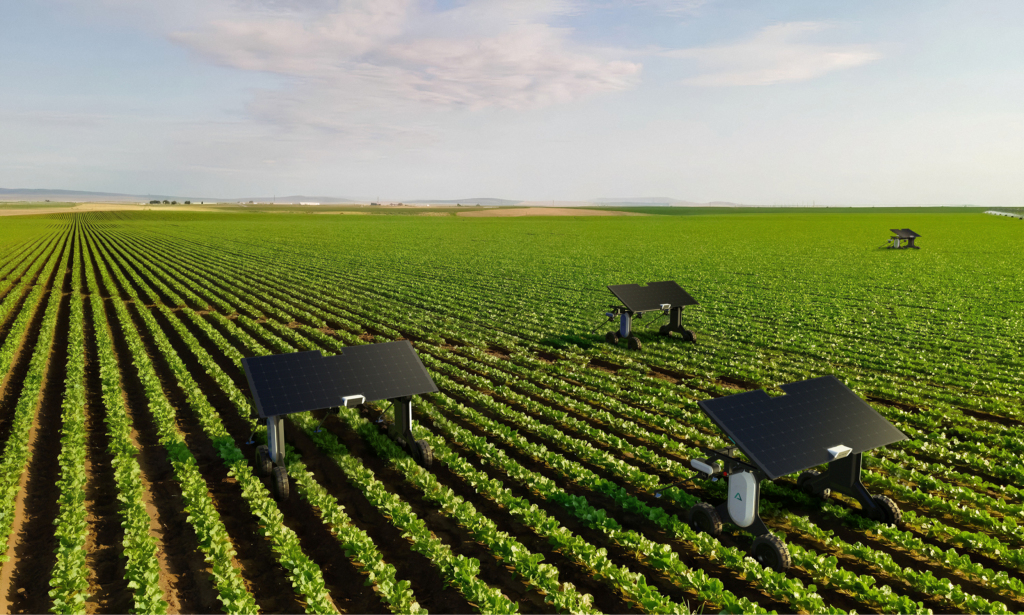
Sensing is only as good as the hardware around it. For Aigen’s Element, a solar-powered weeding robot, our industrial design team engineered housing that protects electronics from mud and rain while eliminating reflective surfaces that would interfere with its computer vision. It’s a reminder that the “sense” stage of Physical AI is a physical design problem as much as an algorithmic one. We’re excited to announce that the Element also won a Red Dot award for 2026.
Integration across hardware, software, and people
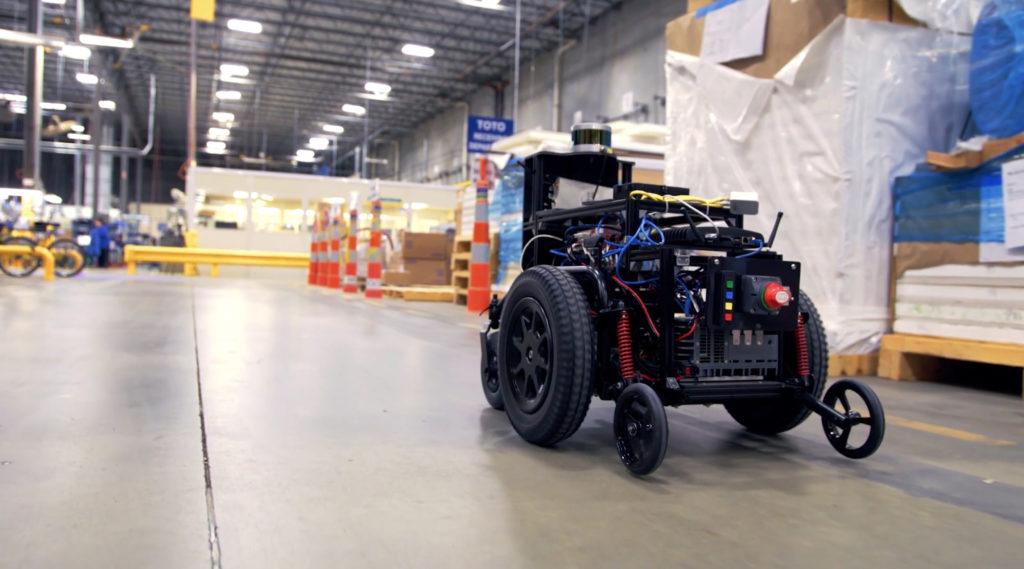
United Rentals has worked with us across a family of autonomous equipment projects: retrofitting forklifts and Genie lifts withsensors and controllers to automate delivery, building an indoor navigation system using sensor fusion across multiple localization sources where GPS doesn’t reach, and designing a unified control application that lets field employees manage a fleet of autonomous vehicles from one interface. None of those pieces works in isolation—the sensing, the reasoning, and the human operator all have to be engineered together as one connected physical AI infrastructure.
Coordinating Physical AI at scale
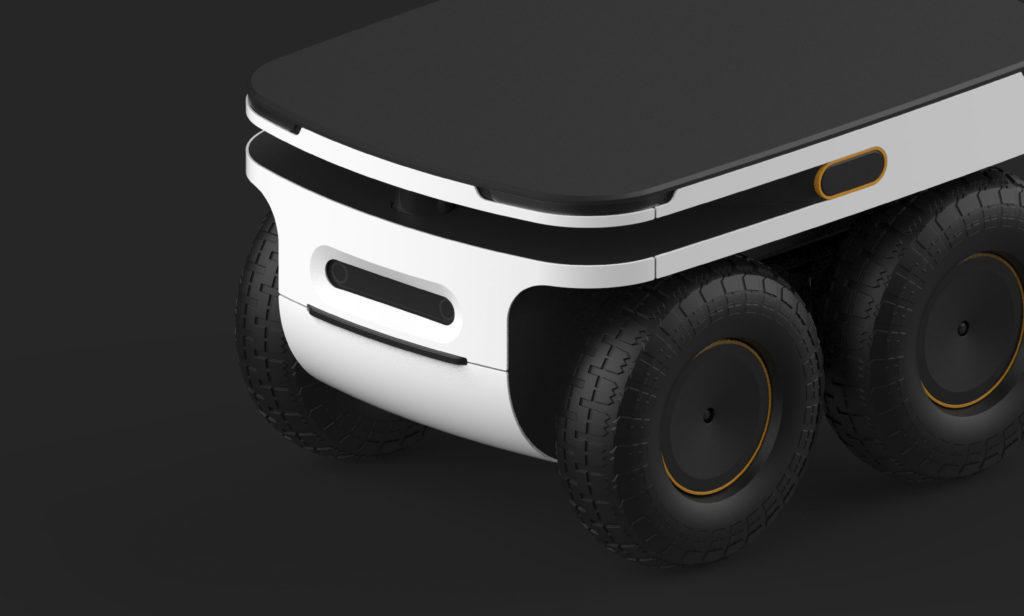
Harmony is the fullest expression of the loop we’ve built: an integration platform that coordinates workforce management, navigation, telemetry, and service scheduling for a variety of robots operating alongside people. By including humans, robots, cameras, and agents in the ecosystem, its ability to “sense, reason, act” will help you stop treating it as a single robot’s problem and start treating it as a system’s problem.
Sensing and reasoning beyond the robot
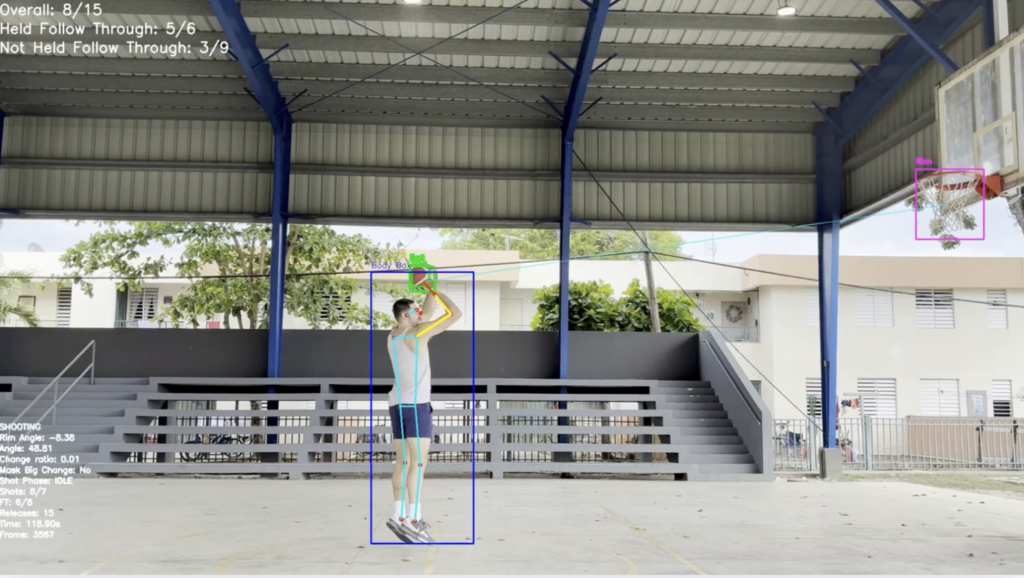
Not every Physical AI system needs a robot body. AthletIQ uses computer vision to turn real basketball practice into game-speed coaching feedback—the same sense-reason loop, running through a phone camera instead of an actuator.
Intelligent products, beyond browser & OS AI
Soluna Sleep integrates scent, light, and sound into one responsive device that senses a room and adjusts it in real time. Lux uses a dielectric smart mirror and computer vision to read skin condition and guide product use, including UV damage detection through specialized cameras. Neither of these is a robot, but both can use sensors and AI and embody intelligence. Both are Physical AI, by any definition above that isn’t narrowed to mean “robotics.”

This last category—intelligent products—is another one we’ll be watching closely over the next few years, because it’s where I think the industry’s current definitions are lagging the reality of the work. As more product teams build sensing and on-device reasoning into hardware from the start, the line between “a robot” and “a smart product” is going to keep blurring and the discipline underneath both is exactly the sense-reason-act loop the 20 sources above already agree on, whether they say so explicitly or not. Much like any software company is thinking about integrating intelligence into their products, any physical hardware can contemplate integrating intelligence into their products.
Part of the progression of physical AI is AI leaving the browser to the OS and then leaving the OS to physical machines.
Putting our Physical AI definition to work
Landing on a definition is the easy part. The harder, more interesting work is everything that comes after—building the next intelligent product, the next automation based on physical sensors, the next robot that coordinates with humans and the environment, and the next automation platforms (like Harmony) that orchestrate work in physical spaces.
A consensus definition gives an industry a shared starting point; actually shipping systems that sense, reason, and act in the real world is what proves it out. That’s the work we’re excited to keep doing, from a single robot to a fleet to a product line.
If you’re building in this space, I’d like to hear whether this consensus matches what you’re actually building, or where it falls short. And if you think you’ve got a Physical AI opportunity of your own, let’s connect.