Electronics Engineering Services
Fresh designs electronics products built for the real world, not just the lab bench—ready for certification, mass production, and reliable field use. From circuit architecture and PCB design to embedded firmware and connectivity, our electronics engineering services team plugs in as your engineering department, or extends the one you have.
Let's get started

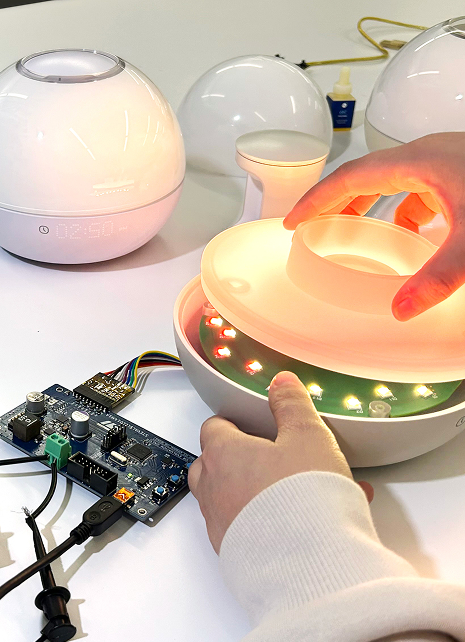
Electronics engineering, from lab validation to real-world reliability
Most teams we work with already know what their product needs to do. But what happens when their product leaves the lab? Catch issues early, and it’s a design decision. Catch them late and launch windows are missed, funding is burned, and recalls become a risk.
Fresh’s electronics engineering services team works across circuit design, embedded firmware, and mechanical and software disciplines simultaneously, because getting products right requires consistent collaboration and decision-making across disciplines.
Whether you’re validating a first prototype or scaling a device already in the field, we tailor the engagement to catch that gap early, before it costs you the time or budget to find it yourself.
Why clients choose Fresh for electrical engineering
Engage Fresh as your electronics engineering department, or bring us in for one workstream, such as architecture, circuit design, or test, without adding hand-offs between vendors. Either way, you can count on the same team from system architecture through prototyping, certification support, and production readiness, adjusting as your program changes.

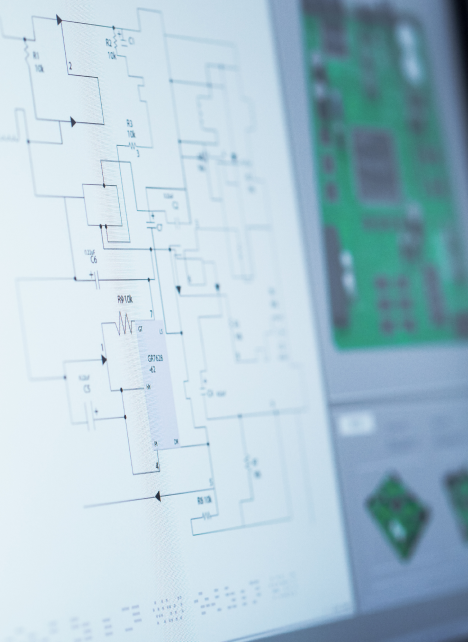
System architecture & engineering capacity
We define system architecture early, before cost and complexity are locked in.
- System-level architecture: Custom robotics and automation, IoT devices, industrial equipment, and custom test systems.
- Hardware/firmware/software partitioning: Balancing cost, reliability, safety, latency, and schedule.
- Requirements capture: Performance, power, safety, environmental, and lifecycle constraints, documented up front.
- Technology trade studies: MCU vs. MPU, embedded Linux vs. RTOS, COTS vs. custom hardware.
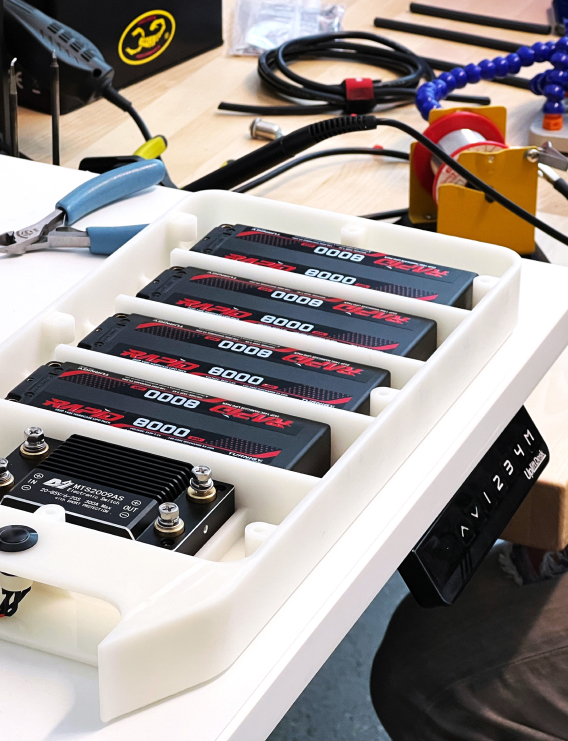
Circuit, PCB, and hardware design
Our team designs circuits and boards that pass both bench testing and certification.
- Schematic capture & mixed-signal design: Sensors, power stages, digital logic, high-speed interfaces.
- PCB layout: Multilayer, rigid-flex, controlled impedance, and high-speed routing for production-ready boards.
- Analog front ends & sensor integration: Low-noise amplification, filtering, precision measurement, encoders, and force/torque sensing.
- Power architecture: AC/DC and DC/DC conversion, battery management, and motor drives for connected and mobile devices.

Embedded systems, firmware & connectivity
We collaborate to build embedded systems and connectivity that perform reliably in the field, not just in a demo.
- MCU/SoC systems: ARM Cortex devices, embedded Linux/Android, and SBCs such as Jetson and Raspberry Pi.
- Low-level firmware: Bootloaders, drivers, RTOS applications, and high-reliability control loops.
- Connectivity & protocols: UART/SPI/I2C, USB, Ethernet, CAN, Wi-Fi, Bluetooth/BLE, cellular, and IoT stacks like MQTT.
- Edge intelligence: Edge computing product development, including signal processing, machine vision integration, and edge AI/ML workloads deployed on-device.
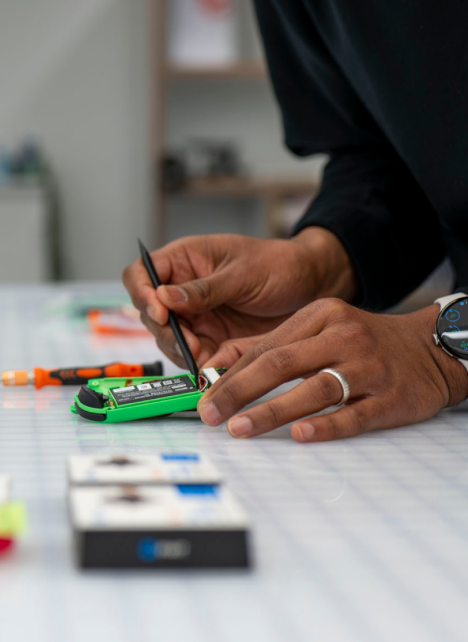
Prototyping, test & production readiness
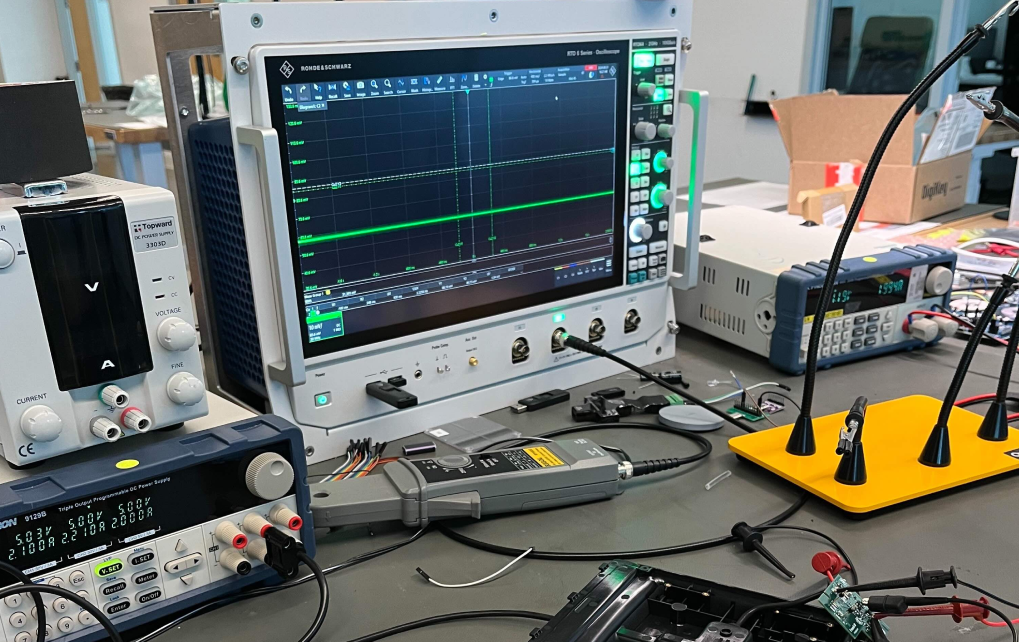
We test early, from first prototype through production, to catch issues before they’re expensive.
- Prototyping & bring-up: Quick-turn rapid prototyping, including PCB fabrication, lab validation, and iterative design revisions.
- Design for manufacture & test (DFM/DFT): Documentation and data ready for contract manufacturers.
- Compliance & certification support: Designs informed by relevant standards — FCC, CE, UL, IEC — with pre-compliance testing to reduce surprises later.
- NPI & production support: BOMs, test plans, EVT/DVT/PVT builds, and sustaining engineering.
Electronics engineering built for the realities of your industry
With decades of diverse industry experience, we bring electronics engineering services to companies across a range of sectors. Our hardware, firmware, and software teams work side by side, with testing built into every engagement from day one.


What are you building?
Tell us the goal, where the product stands today, and what's in the way. Our electronics engineering consultants will work with you to understand your unique requirements and opportunities.