Artificial Intelligence

Computer Vision Consulting & Development

Fresh’s computer vision consulting and development services help teams see, measure, and automate with confidence. Reduce manual review, catch problems earlier, and move from pilot to production faster with custom computer vision solutions built by one team, from initial assessment to prototype, deployment, and ongoing support, in close collaboration with our clients.


Let's Get Started
Utilities-Recognition
Airport Biometrics

Computer vision solutions that work outside the lab

Getting a computer vision (CV) demo working is the starting point, not the whole story. Getting it to work in the real world, with your lighting, cameras, and products, is where most projects stall under challenging constraints in the wild. That gap between pilot and production is hard to close, and the CV algorithm or machine learning (ML) model is only part of the problem.

Fresh’s computer vision consultants close that gap. We assess your problem and propose fitting solutions. If there is no turnkey solution readily available, then our computer vision specialists build, integrate, deploy the solution, and support ongoing operation, planning hardware, software, data, AI/ML, and continuous integration up front so we target real-world deployment and operation as the finish line.

Let’s talk about your project

Why clients choose Fresh for computer vision services and solutions

Computer vision is how machines perceive the physical world, which makes it the foundation of Physical AI: systems that sense, reason, and act. Fresh has built computer vision for robots, autonomous equipment, inspection systems, and consumer products, and we apply that experience across industries. Our strategists, engineers, and designers work as one team, so your solution is planned for real conditions, not just a demo.

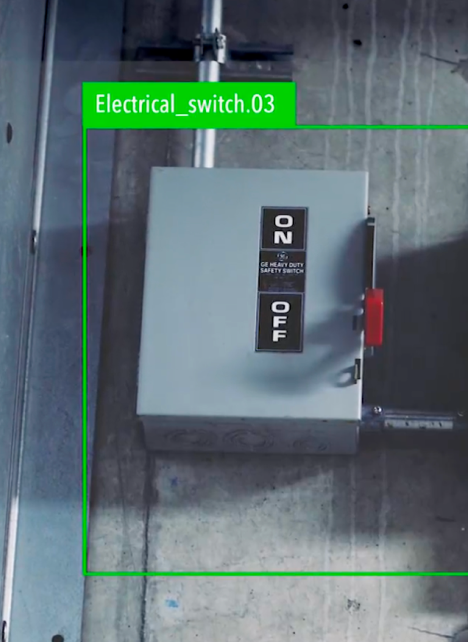
Robot Computer Vision
Computer Vision
Our Computer Vision Services

CV consulting to prove feasibility

Fresh’s CV consultants help you choose an ideal approach for lighting, camera, or sensor specifications, object variation, and validate performance requirements before you invest in hardware or build.

  • Use case and feasibility assessment: business goals, success metrics, potential solution candidates, technical risks, build-versus-buy decisions
  • Architecture and sensor selection: cameras, depth or specialty sensors, LiDAR, edge versus cloud or hybrid compute, so the wrong architecture isn’t locked in early
  • Data and CV pipeline strategy: raw data collection, annotation plans, synthetic data, data processing pipelines, distributed events handling at scale
  • Roadmap and ROI: near- to long-term milestones, phased plan, proof-of-concept scope, and a clear path from pilot derisking to production hardening
Doorway CV
Our Computer Vision Services

Computer vision software for real-world conditions

Fresh provides CV software development services built around your case, with appropriate sensor specs (yes, we handle sensors beyond cameras) and environmental handling tactics.

  • Detection, segmentation, and tracking: object detection, semantic segmentation, multi-object tracking, counting, identification and reidentification, pose and action recognition
  • Inspection and defect detection: anomaly detection, quality inspection, feature detection, pattern recognition
  • Classification, OCR, and biometrics: image tagging, text and barcode reading, license plates, forms and IDs, facial recognition
  • Data/ML engineering pipelines: data annotation and augmentation, dataset curation, ML model training, integrating vision foundation models such as SAM and VLMs, setting up MLOps
Robot Camera
Our Computer Vision Services

Computer vision integration and deployment

We deploy to the edge, cloud, or on-premise and connect to the systems you already use.

  • Edge AI and embedded vision: power-efficient and computationally inexpensive edge CV algorithms or AI/ML models on cameras, drones, and GPU edge computers without cloud compute dependency
  • Cloud data service engineering: scalable AWS, Azure, or GCP data ingestion and processing pipelines for low-latency, high-concurrency, and high-volume image, video and raw data streams, and cloud-agnostic data and AI/ML services
  • Robotics and system integration: perception for ROS-based autonomous mobile robots and arms, plus robot fleet operation dashboards and event pipelines
  • CI/CD support: continuous field operation telemetry, observability pipeline, exception handling, iterative performance improvements
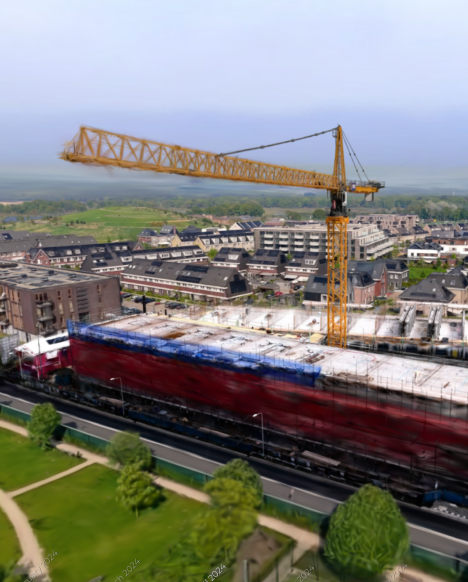
Gaussian Splatting AEC
Our Computer Vision Services

3D computer vision and precision measurement

When the job is measuring or mapping, 3D computer vision delivers accurate results, often with lower-cost sensors than you’d expect.

  • Precision metrology: millimeter-scale measurement from cameras, laser profilometers, and LiDAR
  • 3D reconstruction from videos: photogrammetry, structure from motion, multi-view reconstruction, monocular depth estimation, NeRF and Gaussian Splatting
  • Point cloud processing: LiDAR and camera fusion, obstacle detection, spatial understanding
  • Visual SLAM and navigation: localization and mapping, bird’s-eye-view perception, obstacle avoidance, scene understanding
SecurityCompilanceStandars-Section
Our Computer Vision Services

Secure computer vision infrastructure

As a security-focused computer vision software development company, we build on secure data engineering and machine learning foundations. Fresh meets the following security and compliance standards, along with deep multi-disciplinary subject matter expertise, to build and maintain secure and compliant solutions:

  • SOC 1® Type 1 Compliant
  • SOC 2® Type 2 Compliant
  • CMMC (Cybersecurity Maturity Model Certification) 2.0 Level 2 Compliant
  • NIST (National Institute of Standards and Technology) 800-171 Compliant
  • ITAR (International Traffic in Arms Regulations) Compliant
  • EAR (Export Administration Regulations) Compliant

Contact

Ready to leverage computer vision?

Share a few details about your computer vision project and we'll be in touch to discuss next steps.
  • By submitting this form, you agree to Fresh Consulting’s Privacy Policy

Computer vision development FAQs

Computer vision consulting helps you decide whether and how computer vision can solve a business problem, then plan the data, hardware, and software to do it. Starting with a consultation helps make sure you’re building the right product and building it efficiently.

CV consulting services typically cover use case and feasibility assessment, sensor and architecture selection, data strategy, and a roadmap from prototype to production. Some computer vision consulting companies stop at advice, and any computer vision consulting firm should tell you which it does.

AI vision consulting at Fresh doesn't stop there: the same team that scopes the work can also build, integrate, and support it; if needed, we can offer an extended digital/data/AI team to work on data utilization and step into your workflows, providing a holistic solution.

Computer vision is the broad field of getting software to understand images and video. Machine vision is the industrial application of this technology, usually a camera system on a production line doing inspection, measurement, guidance, or sorting under controlled lighting.

In practice the terms overlap, and projects often combine both.

Our machine vision consulting services and computer vision services overlap and solve the same problems: detection, measurement, defect inspection, and guiding robots. The difference that matters is the environment. Controlled factory lines—where machine vision is often deployed—are typically less convoluted, or more controllable, settings to set up successful solutions than outdoor, variable, or moving scenes.

It depends on how you define them, but consulting decides what to build and whether it will work under technical and business constraints: feasibility, architecture, data strategy, roadmap, risks, and ROI. Development actually builds it: algorithms, custom models, software, and pipelines, followed by integration and deployment.

At Fresh, they overlap. But it’s important to distinguish that we’re not just a development shop and are able to plug in at any phase, whether assisting with upfront planning work or actually building and deploying a CV solution in the real world. Many computer vision development companies hand work off between planning and build, while a computer vision development services company that also consults avoids that gap.

If you already know what you need, computer vision application development services alone may be enough. If you're unsure whether the idea is feasible or which approach fits, start with consulting. AI computer vision development services and solutions from Fresh cover both.

A pilot proves that CV pipeline work under favorable conditions, and production adds everything else:

+ Real lighting, weather, camera angles, and product variation
+ Integration with your existing systems
+ Edge hardware limits
+ Ongoing monitoring and retraining.

When those constraints are discovered late, teams rework the system or abandon it.
The fix is to plan for them from the start: assess feasibility, define success metrics, design the data pipeline and deployment target, and test under real conditions early.

That is how teams implement computer vision solutions that move from a demo to something operations can rely on.

Pre-trained models and ready-made tools shorten the path to a prototype, but they rarely arrive ready for your environment. Even strong vision foundation models and VLMs (vision-language models) need site-specific data, tuning, and integration before they perform reliably on your cameras, products, and conditions. A general-purpose VLM might describe a scene well but still miss the specific defect, part, or edge case your operation depends on.

The reusable model is a head start, not a finished system. Fresh picks the method that fits the problem, from classical vision to deep learning to foundation models and VLMs, and customizes where your environment demands it, as well as handles exceptions in operation.

Data is the lifeblood for AI/ML applications. Model accuracy depends on data that represents your real conditions and ML best practices, and many teams discover too late that theirs doesn't. Common problems include:

+ Inappropriate accuracy metrics definitions that misalign with use case constraints
+ Inadequate, incomplete or imbalanced data quantity and variety representation, for instance, too few examples of rare defects or events, data collected under conditions that differ from production, lack of necessary data augmentation means
+ Poor dataset curation practices: inconsistent labeling guardrails, no dataset quality assurance
+ Lack of continuous performance monitoring and improvements on dataset and ML processes.

A data strategy up front prevents this: what are the constraints, what to collect, how to annotate it, where synthetic data or augmentation can fill gaps, and how to quantitatively measure data quality. Fresh builds the data pipeline, annotation, and dataset curation into the project plan so training data isn't the reason a computer vision project stalls.

Building a strong computer vision team in-house takes a long time and a significant investment in hiring, tools, and infrastructure, and the trial-and-error path to a working system is costly. Computer vision consulting companies like Fresh give you experienced engineers on your specific problem right away, plus perspective from other deployments on what tends to go wrong, reducing risks, saving costs, and speeding up time to market.

Many clients use a computer vision consultant or a pool of computer vision developers for hire for the first projects, then build internal capability around a plan they can justify. A good computer vision developer can also train and mentor your team so you can run and extend the solution.

Computer vision, AI models, and edge hardware depend on each other, and fixing a mismatch later is expensive. The camera, sensor, and computer you choose decide what the model can do, and the model decides what hardware you need. Treating them as separate workstreams often means rebuilding one to fit the other.

Early guidance can also reveal lower-cost options, such as standard cameras with 3D reconstruction in place of costly LiDAR in some applications. Retroactive fixes and late troubleshooting cost much more than getting the architecture right first.

Computer vision as a service (CVaaS) platforms and pre-built APIs from a computer vision software company work well for common, generic tasks such as reading standard text or detecting everyday objects.

A custom computer vision development company makes sense when your task is specific: unusual products or defects, difficult lighting, special cameras, strict latency or offline requirements, or tight integration with robots and machines. Custom solutions can also protect your data and your competitive edge, since the model is trained on your data and tuned to your process.

A custom computer vision software development company can mix both, using services where they fit and custom computer vision software solutions where it matters.

Edge deployment runs the CV/ML/AI pipeline on or near the camera, which cuts latency, keeps working without a network connection, and reduces bandwidth and cloud costs. It suits robots, vehicles, drones, kiosks, and factory lines where decisions must happen in milliseconds.

The cloud is better for heavy processing, large archives, and analytics across many sites.

Many AI computer vision solutions actually combine both. A typical AI computer vision solution runs inference at the edge, with the cloud handling training, monitoring, and reporting.

At Fresh, our AI computer vision services include recommendations based on your latency, connectivity, privacy, and cost requirements.

It depends mainly on data readiness and how many systems the solution connects to.

+ A feasibility assessment and roadmap is usually measured in weeks with a clear problem statement.
+ A proof of concept often takes a few weeks to a couple of months depending on prerequisite readiness.
+ Moving to production, including integration, testing in real conditions, and deployment, usually takes a similar span again, with more success assurance based on the feasibility and proof of concept learnings.

For projects with well-labeled data and clear success criteria, work can progress significantly faster. A short assessment gives you a realistic timeline for your project.

Computer vision service pricing depends on scope, so it helps to think in stages.

+ An assessment and roadmap is a short, fixed-scope engagement.
+ A prototype is larger and depends on the condition of your data, hardware, and goals.
+ Production deployment and integration is the largest stage and scales with the number of cameras, sites, and systems involved.
+ Computer vision development services quoted before anyone has looked at your data and environment are guesses.

Most clients get a reliable estimate after the assessment stage. Please reach out to us if you have questions or need more clarity.