Services

Physical AI Solutions

Fresh brings AI into the physical world across robotics, automation, and the products and equipment you build. We close the loop between sensing, reasoning, and action, so systems perform reliably long after the demo ends.
Full Wifth_MOAB
Physical AI Robotics

New industry trends, longstanding experience

“Physical AI” is a new name. The work isn’t. For years, Fresh’s team has built systems that let machines sense, decide, and act in the real world—vision systems that catch defects at production speed, robotic cells that adapt to changing parts instead of breaking on them, mobile robots that navigate a floor that’s never the same twice.

What’s changed is the name organizations now search for, and a growing set of tools that make it faster to build. What hasn’t changed is what it takes to hold up outside a demo: hardware, perception, models, simulation, and human-centered design, engineered together, not stitched together after the fact.

That’s the part most vendors get wrong. It’s the part Fresh has gotten right since before the term existed.

Schedule a discovery call

Why teams choose Fresh for Physical AI

Our Physical AI work is defined less by a single technology and more by how we engineer systems that close the loop between sensing, reasoning, and physical action as one team, not a handoff between vendors.

air hockey – End-Hero-Shot
wakesurf harshil
Physical AI Capabilities

Intelligent hardware products

Fresh engineers robotics, industrial design, and embedded firmware together for real operating conditions.

  • Robotics & automation systems: Custom robotic cells for assembly, material handling, palletizing, and machine tending, plus AMR navigation that adapts to a changing floor.
  • Product & industrial design: Hardware designed to be built, serviced, and trusted in real-world settings.
  • Embedded firmware & controls: Compute, sensing, and control logic built into the product, not bolted on.
  • Digital twins & simulation: Stay in the loop after deployment, validating edge cases and updating models as real data comes in.
Aigen computer vision
Physical AI Capabilities

Systems and robots that perceive and reason

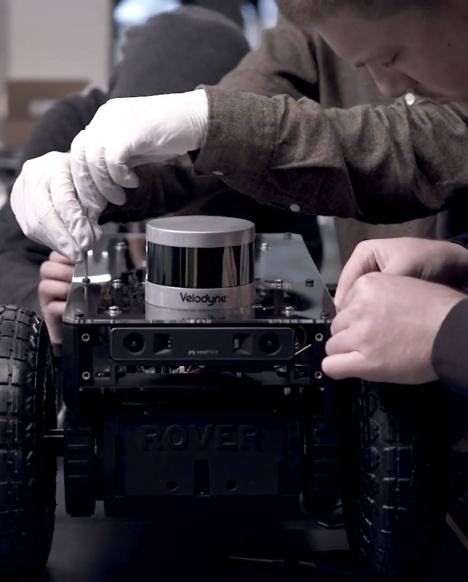
Fresh builds devices and software that perceive the physical world—computer vision, sensor fusion, and edge AI turning signal into real-time understanding.

  • Computer vision: High-speed defect detection and inspection at production speed.
  • Multimodal perception: Cameras and sensors fused into one picture, built for glare, motion blur, and variable lighting.
  • Sensor fusion & localization: Camera, lidar, encoder, and force data fused into one real-time picture of what’s happening.
  • Control system integration: Turning that picture into signals robots, PLCs, and control systems act on — live signals, not fixed assumptions.
Gaussian Splatting AEC
Physical AI Capabilities

AI-enabled physical experiences

Fresh designs spatial, immersive, adaptive experiences—digital-physical solutions where intelligence meets the human.

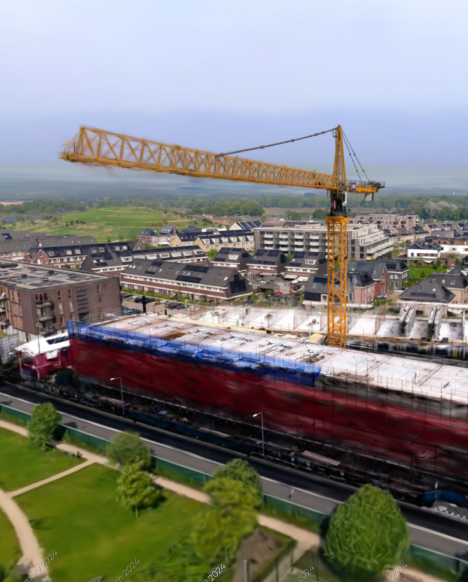
  • Spatial AI & digital twins: 3D understanding of real environments, used to validate designs and simulate scenarios.
  • Human-machine interfaces: Adaptive workflows for inspection, picking, and exception handling, built so people can own and extend them long after launch.
  • Computer vision & generative AI: Brought into requirements validation, scenario generation, and synthetic data creation earlier in development.
  • Gaussian splatting experiences: Real spaces captured and rendered as navigable 3D scenes.

Ready to get started?

Whether you're evaluating your first physical AI use case or scaling beyond early pilots, Fresh can help you design, integrate, and validate systems that work in the real world and fit your existing operations.

  • By submitting this form, you agree to Fresh Consulting’s Privacy Policy

Physical AI FAQ

Physical AI is the discipline of building systems—robots, equipment, or connected products—that sense the physical world through sensors and vision, reason over that data with AI models, and act back on the physical world within defined safety and performance limits, adapting to conditions that weren't fully known in advance.

Physical AI is an application pattern—sense, reason, act—rather than a single product category. It spans robots and automation as well as intelligent products designed with sensing and edge AI built in from the start.

The name "Physical AI" points at something real: the reasoning loop closing through hardware instead of stopping at a screen.

The label is new; the engineering isn't. Fresh's team has been sensing, perceiving, and controlling systems in real environments for years. We use "Physical AI" because it's how organizations are searching for this work today, not because the underlying discipline changed overnight.

Three things separate genuine Physical AI systems from a proof-of-concept:

1. Edge-native compute, because decisions can't wait on a round-trip to the cloud when the loop runs in milliseconds

2. Multimodal sensor fusion, combining vision, lidar, force, and audio into one situational picture

3. Simulation and digital twins used as ongoing operational partners—not a static model built once, but a live loop that keeps validating and adapting as real-world data comes back.

Intelligence built in at design time outperforms intelligence bolted on after the fact.

Physical AI shapes where sensors live, how edge compute is architected, which AI models run on-device, and how simulation supports validation before anything ships. Fresh works alongside product and engineering teams from early requirements through testing, not after the hardware is already locked.

Most Physical AI companies specialize in one layer of the stack—a robot, a perception system, a simulator, an orchestration platform—leaving the integration work to you. Fresh complements those offerings as a systems integrator, aligning hardware, perception, controls, and software into one system.

Our differentiator isn't any single technology. It's offering hardware engineering, perception and reasoning, and human-centered design with one delivery team, working together under one roof.

Autonomy without people in the loop tends to fail exactly where it matters most: the exception case, the edge condition, the moment a system needs a person to step in.

Fresh designs interfaces and workflows so the people running these systems day to day can understand, trust, and adjust them, not just the specialists who built them.

That's a deliberate choice: augmentation, not replacement.

Physical AI capabilities are maturing quickly, while labor constraints, quality expectations, and product variability keep rising. Teams that start now can validate a bounded, provable use case, build internal confidence, and develop a repeatable deployment pattern instead of catching up later from a standing start.

1. Projects involving commercially proven applications like vision-guided pick and place, inspection and defect detection, AMR navigation, palletizing, machine tending, and process monitoring.

2. Projects where we work alongside clients who are building their own autonomous systems or robotics platforms, and teams designing intelligent products that embed sensors, edge AI, and control logic into the product architecture itself, not bolted on as automation later.

Yes. Most engagements add perception, AI, and robotics capabilities to lines, cells, or equipment that already exist. When it makes sense, Fresh also designs and builds new systems from the ground up, but rip-and-replace isn't necessarily the best option and isn't typically our first recommendation.

Physical AI only creates value when systems operate dependably in real environments and can be supported by operations teams. Fresh emphasizes validation in real conditions, operator-ready interfaces, and scalable rollout plans so deployments move beyond pilots and become durable parts of daily work.

While we plug in wherever and whenever clients need us to, projects typically begin with a discovery and opportunity assessment, then concept and architecture, detailed design, build and integration, simulation and real-world testing, deployment, and ongoing optimization.

At every stage, the focus is reducing technical risk and keeping the system aligned with operational reality, not just what performs well in a controlled test.

A short discovery conversation is usually enough to surface one or two high-impact opportunities and figure out whether you're ready for an assessment, a concept phase, or a pilot.

From there, our team will outline a path that fits your budget, timeline, and risk tolerance.