Article
What Is Gaussian Splatting? Three Fresh Perspectives

May 26, 2026 ...

What is Gaussian Splatting? If you’ve heard the term and felt like everyone else was in on a secret of what it is and why it’s relevant, you’re in good company—well, “good” is up for debate, but my company, you most certainly are in.
The truth of the matter? I’m still wrapping my head around the question: What is Gaussian Splatting? I understand that the phrase has leapt from graphics research papers written in the early 1990s into architecture, mapping, robotics, real estate, and entertainment. But if you’re like me—a non-technical person, at least when it comes to cutting-edge computer vision techniques—most Gaussian splatting explainers either drown you in the technical points, or only cover one narrow use case, and leave you with more questions than you had to begin with.
I set out to get a baseline by talking to three Fresh Consulting Gaussian splatting consultants. Technical posts from those same Fresh SMEs are en route; deep dives into use cases are on our publishing horizon. Before we get to any of that, though, I reckoned it was worth querying some of our Gaussian splatting specialists to get a lay of the land, providing basic explanations of the technical elements of the field within the context of practical, real-world applications that are easy enough for the rest of us to wrap our heads around.
For the purposes of setting the stage, this post will focus on answering a key question in as simple terms as possible: What is Gaussian Splatting?
Onward!
Gaussian Splat Credit: https://superspl.at/scene/84df8849
What Is Gaussian Splatting?
Okay, bear with me. Here’s my super non-technical definition.
Based on my conversations with SMEs, my understanding is that Gaussian splatting is essentially a way to turn overlapping photos or video of a person, place, or thing into a 3D reconstruction—a 3D scene representation that you can move through or manipulate with real‑time rendering, instead of waiting for slow offline processing.
Mikey Weller—one of Fresh’s robotics engineers who has a forthcoming article on Gaussian splatting in sports—put it in a way I could wrap my head around. Instead of building everything out of triangles like a traditional 3D model in video games, for example, Gaussian splatting represents the world as millions of tiny, soft 3D blobs—Gaussian splats—each with a position, color, size, and transparency. I believe I’m not misrepresenting him, but I reserve the right to edit this blog post in the future if he says I’m a bonehead.
I’ll let Mikey speak for himself, though. Here’s a quote from his upcoming blog post:
“In traditional 3D graphics, scenes are built from polygons — rigid geometric faces that approximate shapes. That works for video games and CGI, but it struggles to capture the fine-grained visual complexity of a real scene.”
You can see this constraint with one of my favorite video games of all time, both in the past and present. Let’s compare the original Final Fantasy VII on PlayStation to Final Fantasy VII Rebirth. The 1997 game used very low‑polygon character models—Cloud’s battle model was around 900 polygons—walking across beautifully painted, pre‑rendered, but completely static, 2D backgrounds. Rebirth, by contrast, pushes modern hardware to render Cloud with roughly 220,000 polygons, along with dynamic lighting and dense, fully 3D environments.
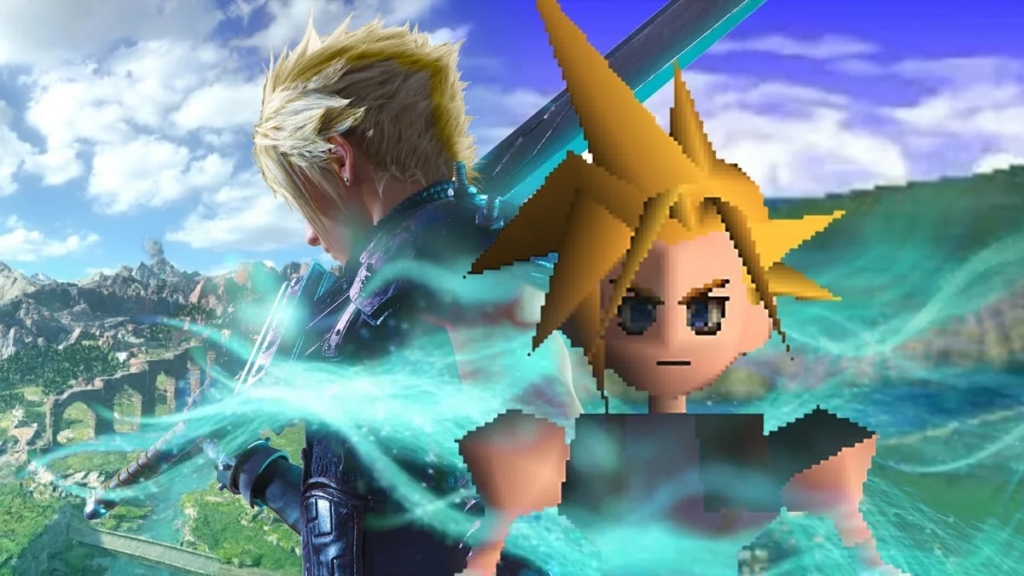
Despite over 20 years of technological advancements separating the two games, under the hood, both games rely on the same basic approach: they represent “reality” with polygonal meshes and textures. FF7 Rebirth has vastly improved graphics (even though my nostalgia leads me to prefer the original version), and that leap in fidelity comes from throwing more polygonal triangles and smarter shaders at the game’s visual representations of scenes, settings, battles, etc.
But within the context of video games, Gaussian splatting is already being used in playable demos and experimental entries—check out PlayCanvas’s post about how they launched a browser-based FPS demo where the entire environment is a scanned Gaussian splat, with traditional physics and AI layered on top. Gaussian splatting in video games is not yet mainstream, however. The technology hasn’t been applied for AAA titles; at the moment, it’s an innovative complement to traditional polygon-based workflows.
Back to Gaussian splatting, in general, and my understanding that it’s a way to turn overlapping photos or video in a 3D scene that you can experience in real-time.
When you move a virtual camera through the scene, Gaussian splats are “splatted” and blended onto the screen, creating a realistic result that feels like a living 3D photograph, not a flat 2D panorama.
Recent work from groups like Inria shows that 3D Gaussian splatting can reconstruct detailed scenes from images and render them at interactive frame rates, which is why it has taken off so quickly.
Think of it as point cloud 2.0. A classic point cloud says “there’s something here” at millions of points; a splatted scene says “here’s how this space actually looks as you move through it,” with softness, reflections, and parallax that feel surprisingly real. Two approaches to 3D scene representation; unique degrees of fidelity and realism.
So, with my paltry, cursory understanding committed to the public record, let’s dive into what the experts say, which will be far more interesting and illuminating than anything I can come up with.

Justin, the Motion Designer: Capturing Real Spaces in a Realistic Way
Talking with Justin Brunson, a senior motion designer at Fresh, he explained Gaussian Splatting as “a way to bottle a real place so the light still feels alive when you move through it.” For Justin, the appeal isn’t the algorithm, which makes sense given his professional focus. The allure of Gaussian splatting comes with his ability work inside a captured environment that behaves more like footage than a rigid 3D model, bringing it to life.
Justin’s capture workflow looks roughly like this:
- Shoot a dense set of images or video. Justin walks or flies a camera around the subject, getting as many clean angles as possible. “You want lots of motion and overlap, but no motion blur or artsy depth of field,” he noted, because the reconstruction process needs sharp, consistent detail.
- Generate a point cloud. Structure‑from‑motion turns those frames into a point cloud, similar to what you’d get from LiDAR: millions of dots in 3D saying “there’s something here.”
- Turn points into splats. A splatting pipeline then replaces each point with a 3D Gaussian and optimizes them so, together, they reproduce the captured views and look convincing from new angles.
Early on, Justin experimented with throwing everything at the pipeline—drones, 360 cameras, DSLRs stitched together—chasing the most dramatic lighting and specular highlights. It worked, but it was fragile: “In tight or low‑light spaces, the model falls apart faster. You get ghosts, floaters, weird geometry.”
More recently, Justin has used capture setups that combine LiDAR and images into a robust base point cloud, then layer splats on top. These pipelines give more consistent results, but sometimes tame the most dramatic light.
In his day‑to‑day workflow, Justin treats Gaussian splatted scenes as new source footage:
- He scouts camera moves inside a digital environment, the way he would on a physical set.
- He mixes Gaussian splatted environments behind traditional CG and motion graphics, using their photoreal parallax instead of manually animated camera tricks.
For Justin, “what is Gaussian splatting?” translates to: a new way to capture real spaces as living 3D backdrops you can direct like a film set.

Amber, the Creative Director: Building Immersive Experiences on Top of Splats
Where Justin sees a captured stage, Amber sees an experience canvas. Once Justin’s team has a Gaussian splatted scene, Amber’s job is to decide how humans will actually move through it and what they’ll discover along the way.
“The splat is the world, but it’s not the experience yet,” she says. “You still have to design how people enter, where they go, and what they notice.”
Recently, her team implemented a linear but powerful pattern: click‑to‑walk. The way she described it reminded me of the 1990s point-and-click adventures from LucasArts (if you can’t tell already, I’m a big video game fan).
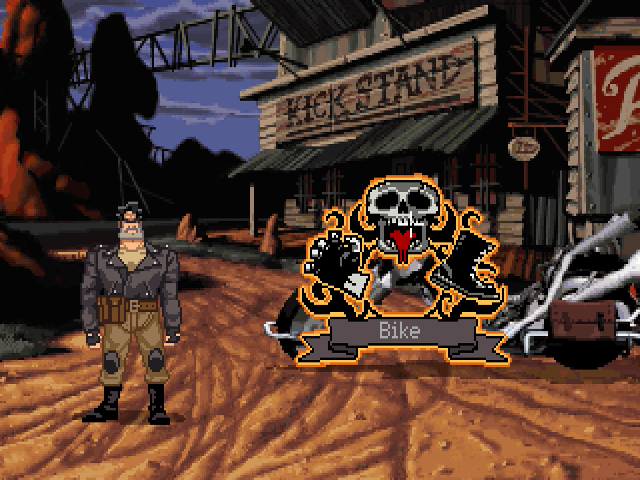
Amber showed me her work on an internal project where we see the environment from a first‑person or slightly elevated view; when you click on a point in the scene, the camera glides to the next destination. On top of that, Amber and her collaborators add:
- A map or minimap so people understand where they are in the space.
- Points of interest that highlight key objects or areas with subtle UI cues.
- Guardrails so you don’t, for example, get stuck inside walls or at awkward angles.
The UX problems are familiar—what you might run into in an app or website—but in the case of Gaussian splats, the challenge is spatial:
- How do we keep exploration and discovery delightful and fun, without letting people get hopelessly lost?
- How fast should motion feel so it reads as natural, not jarring or nauseating?
- Where do we put labels or hotspots so they’re informative without cluttering the beautiful view?
I immediately thought of a museum-like context; how Amber’s spatial experiences could guide users past key artifacts (almost like a dark ride at Disneyland), while also giving them the freedom to branch out, wander side corridors, and embrace a story of their own. Or imagine in real estate or tourism—Gaussian splatted environments could balance free exploration with a suggested path through the most important rooms or vistas.
When I asked Amber about her work environment, she said that not only does it take place in Figma (one of Fresh’s primary UX/UI workflow technologies), but that it’s not so different from traditional UX design: “You’re still mapping flows and orchestrating the user journey, but now the flow happens through a real place instead of just screen to screen.”
For Amber, it seems to me that Gaussian Splatting is the spatial medium—good creative direction and UX are what turn this new experiential medium into a coherent story instead of a flashy tech demo.

Mikey, the Robotics Engineer: A Faster World Model for Machines
Mikey, a robotics engineer who specializes in computer vision and machine vision, among other things, approaches Gaussian splatting from a different angle, asking:
“How does a machine understand and plan in 3D space?”
Mikey explained the evolution of spatial computing, which put it in terms that were easy for me to understand:
- Traditional graphics pipelines represent worlds as meshes made of triangles, then paint them with textures. That’s how most games and many VFX shots are rendered today, as discussed previously.
- Neural Radiance Fields (NeRF) showed that you can train a neural network to learn how light behaves in a volume, producing beautiful results, but training and rendering real‑time radiance fields can be slow and “compute‑intensive.”
- 3d Gaussian splatting keeps things explicit: instead of hiding the scene inside a neural net, it optimizes millions of 3D Gaussians and uses a GPU‑friendly rasterization pipeline to render them in real time.
For custom robotics and simulation, that explicit, real‑time world model is the appeal. With Gaussian splatting, a robot can:
- Use cameras to build a splatted model of its environment.
- Render hypothetical trajectories through that model—Mikey described it as a robot “dreaming” different paths to a goal.
- Choose a plan based on those internal video‑like simulations before acting in the real world.
Mikey’s shorthand answer to “what is Gaussian splatting?” is simple: “It’s a way to give machines a scene they can see and think inside of, and fast enough to generate meaningful real-world results.”
Gaussian Splat credit: https://superspl.at/scene/8d5c3046
So what is Gaussian Splatting, really?
Back to me:
- A marketer by trade
- A storyteller at heart
- A bona fide daydreamer who, while somewhat lost amidst the complexity of my conversations with these brilliant SMEs, gained an understanding of Gaussian splatting more tethered to reality than the fantastical possibilities that initially took off in my mind.
From my POV, across Justin’s, Amber’s, and Mikey’s perspectives, a pattern emerges:
- For Justin, Gaussian splatting is a new kind of 3D capture that preserves how light and natural textures feels in a digitally represented space.
- For Amber, it’s the spatial evolution for designed journeys—click‑to‑walk tours, guided exploration, and game‑like interfaces.
- For Mikey, it’s a fast, explicit world model for robots and simulators.
So, then, “what is Gaussian splatting?”
- A technique for turning overlapping images of the real world into photoreal, interactive 3D scenes.
- Using millions of tiny Gaussian splats instead of just triangles or neural networks.
- Leveraging this powerful technology so people and machines can explore, design, and reason inside those scenes in real time.
Gaussian splatting is these things and more, but the most interesting thing to me, as a non-technical person, are the possibilities that Gaussian splatting and its Gaussian splats present. Across industries, the use cases I can think up in a few seconds are virtually endless, and whether you’re interested in the next graphical evolution of video games, creating safer environments for human-robot collaboration, or creating immersive experiences for customers, I think Gaussian splatting will be of interest to you as well.
This piece is deliberately a definition and context‑setting post. In follow‑ups, each of the aforementioned SMEs will go deeper into their lane, whether explaining best practices and tools, discussing spatial UX patterns for splatted experiences, and reflecting on how Gaussian Splatting compares to NeRF and other world‑model approaches in robotics.
I can’t wait to see what our Gaussian splatting experts say. But what I’m even more excited about is the work that’s currently happening at Fresh, a Gaussian splatting consultancy that combines the qualitative and quantitative capabilities needed to bring this exciting new technology to fruition.
Further reading is linked below; I’m confident you’ll be as fascinated as I was in exploring it.
Gaussian splatting credit: https://superspl.at/scene/23ebe85c
Additional Reading
Industry Use Cases: Architecture, Engineering, Construction (AEC)
- A New Era of Realism: Transforming Digital Twins with Gaussian Splatting
- Introducing Gaussian Splats for AEC
- Khronos announces glTF Gaussian Splatting extension
Industry Use Cases: Tourism / Exploration
- Gaussian splatting for high-fidelity reconstruction of museum artifacts
- High-fidelity 3D reconstruction of cultural heritage
- Meta wants to upload the real world
Industry Use Cases: Real Estate
Industry Use Cases: Entertainment
- ‘Jurassic World Rebirth’ director scouts a gaussian splatted scene in real-time
- Japanese band Perfume unveils a music video created using Gaussian splats
Industry Use Cases: Robotics / CV
- Building Robotic Mental Models with NVIDIA Warp and Gaussian Splatting
- Gaussian Splats: A Paradigm Shift in 3D Scene Representation
Industry Use Cases: Consumer
Industry Use Cases: Mapping
- Why 3D Gaussian Splatting Matters for Mapping, Planning, and Simulation
- What’s New in ArcGIS Drone2Map 2025.2
Gaussian Splatting How Tos / Showcases
- Stunning Red Firebug Created With 3D Gaussian Splatting
- Snowy Hamburg Street Captured With 3D Gaussian Splatting
- Exploring 3D Gaussian Splats In Virtual Reality
General News about Gaussian Splatting