Machine Vision Services
From sensor-based perception to AI-enabled decision-making, we design and integrate advanced machine vision systems that let robots and automated equipment see, understand, and respond to their surroundings in real time. Our solutions deliver precision that transforms manufacturing, logistics, and industrial automation at scale.
Let's Get Started

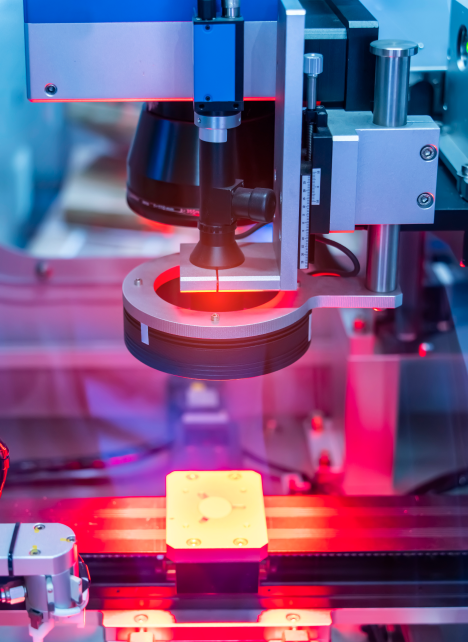
Custom machine vision integration, engineered for your environment
A lot of quality and inspection work still relies on people visually checking product by hand, even where automation has been attempted. Poor lighting, high speeds, reflective surfaces, and hard-to-classify defects are exactly the conditions that make an off-the-shelf vision system fail once it’s actually deployed.
Fresh designs custom lenses, lighting, and AI models around your production conditions, then integrates the system with your existing robotics, automation, and factory data infrastructure so it works immediately.
We tune optics, lighting, and camera placement to your actual surfaces and speeds, train AI on your real defect data—including the rare cases off-the-shelf systems miss—and connect the finished system to your existing MES, ERP, PLC, and robotics infrastructure. The result: fewer false rejects, less downtime, and ROI well inside the first year.
Why clients choose Fresh for machine vision
Machine vision projects often stall when no single vendor owns the whole stack—optics, AI models, and factory integration split across three or four providers. We help clients realize measurable ROI faster, because every layer is built to work together.


Advanced Sensing Technologies
Our machine vision systems combine LiDAR, high-resolution imaging, and multi-sensor fusion to capture clean data even in poor lighting, high glare, or fast-moving production environments.
- Multi-Spectrum Imaging: RGB, infrared, and hyperspectral cameras for diversified visual analysis
- 3D Vision & Depth Sensing: Structured light and stereo vision for accurate object detection and localization
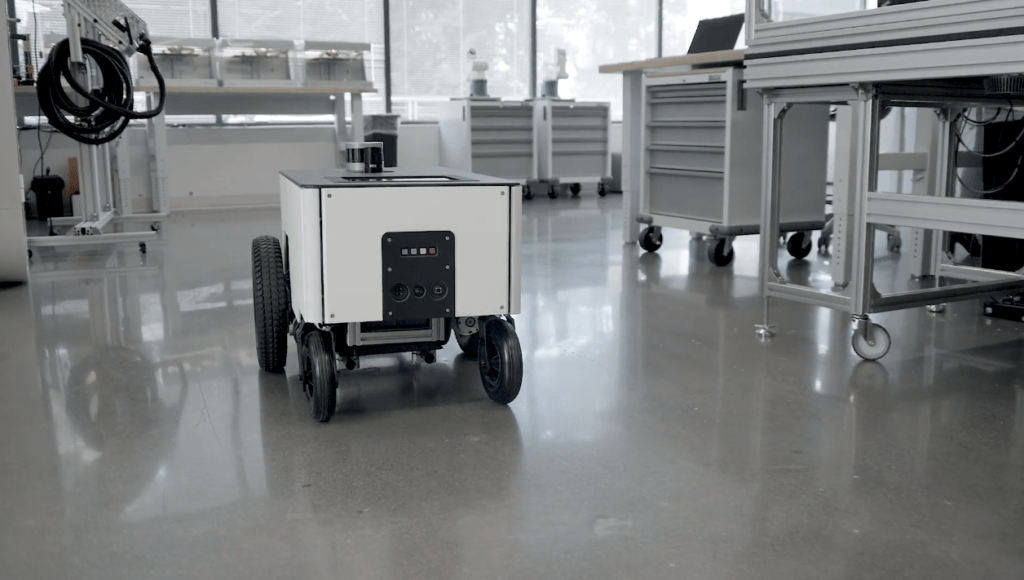
- LiDAR Mapping: Spatial awareness and real-time environmental visualization for AMRs and other autonomous systems
- Edge Computing: Embedded onboard processing for edge-level decision making

Intelligent Decision Making
As machine vision system integrators with deep physical AI and machine learning expertise, we turn raw visual and sensor data into decisions—flagging defects, tracking patterns, and adapting responses autonomously, even when good defect examples are scarce.
- Real-Time Processing: Rapid image and sensor-data interpretation for instant decisions
- AI Defect Detection: Machine learning models trained and validated on your real production data, including rare, low-sample defect types off-the-shelf systems miss
- Pattern Recognition: Classification and tracking across dynamic environments
- Predictive Analytics: Data-driven forecasting for proactive quality control

Integration for Your Workflow
We design end-to-end machine vision systems purpose-built for your operations, integrating hardware, optics, and control software into existing environments—from data centers to the factory floor—without ripping out equipment that already works.
- Rapid Prototyping & Configuration: Vision prototyping validated against your real parts before committing to sensors, optics, and lighting for full deployment
- Software Integration: Real-time connectivity with existing MES, ERP, PLC, and robotics infrastructure, so results drive action instead of sitting in a dashboard
- Turnkey Implementation: Installation, commissioning, and operator training included
- Continuous Development and Optimization: Ongoing tuning and system evolution as operations expand

Advanced Hardware Integration
Fresh builds industrial vision systems that use multi-sensor fusion to hold up against shadows, glare, reflective metal and glass, and 3D parts with curved or hidden surfaces—conditions that overwhelm standard cameras.
- Visual Sensors: 2D area scan, line scan, 3D, and smart camera technologies, positioned and selected to eliminate motion blur on fast-moving lines
- Environmental Controls: LED, laser, structured, and multispectral lighting tuned to defeat glare and reflection
- Optics: Custom lenses tuned for field of view, depth, and resolution — including curved and hard-to-reach surfaces
- Processing: Edge computing, GPU acceleration, and real-time analysis systems

Machine Vision Software Development
We engineer machine vision software that pairs rule-based logic with deep learning, so accuracy improves with every scan instead of drifting as lighting, dust, or backgrounds change on the line.
- Algorithm Development: Rule-based and deep learning models tailored to application needs
- Adaptive Machine Vision Inspection: Continuous learning from production data that resists drift from dust, lighting shifts, and background changes
- Real-Time Analytics: Processing that supports immediate, data-driven decision-making
- System Integration: Seamless connectivity with MES, ERP, and database infrastructures
- MLOps: Streamlined development and deployment cycles for scalable, repeatable model updates

Custom machine vision applications across industries
As machine vision system integrators, we help clients combine high-speed imaging, AI-driven perception, and real-time analytics, enabling smarter automation and decision-making to deliver enhanced precision, efficiency, and insight across industries. Our solutions deliver measurable ROI through higher quality, faster throughput, and scalable performance across data centers, manufacturing, logistics, healthcare, and beyond.


Let's discuss your machine vision project
Schedule a discovery with our machine vision specialists so we can learn more about unique use case and environment.