Article
Gaussian Splatting in Sports: Redefining Fair Play

June 12, 2026 ...
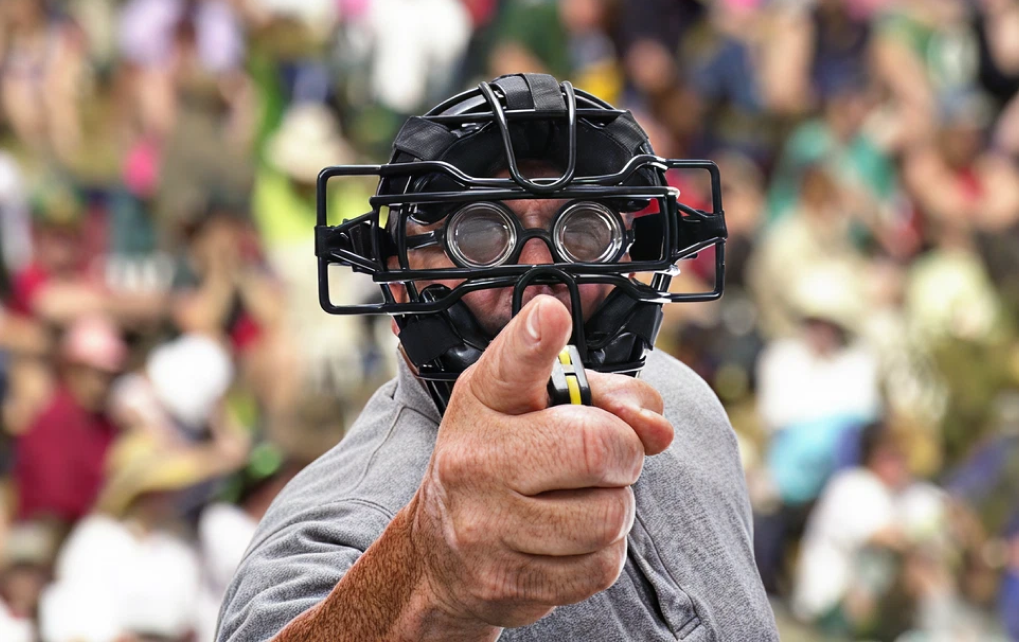
Robots are not (yet) agile enough to challenge us on the field. But robotic sensing is already changing how sports are played, officiated, analyzed, and broadcast. Across professional leagues, cameras, lasers, chips embedded in balls and equipment — and the software that crunches through all of these datastreams — support everything from ball tracking and replay review to player analytics and fan-facing immersive experiences. Most of this technology still represents the game through flat video, 2D overlays, and fragmented tracking systems — high-tech signs and portents to be interpreted by the video assistant referee team in the back room. But watch out, back-room referees and umpires! There is a hot new prospect in the field of interpreting space and time: Gaussian splats — a technique for building photorealistic, navigable 3D scenes from ordinary camera and sensor data.
Splats let robots combine data from many different kinds of sensors — from cameras and lasers to RFID trackers and accelerometers — to create a dynamic world model painted with 3D brush strokes.

More expressive than a point cloud, more precise than voxels, and much more subtle than Lara Croft’s polygons, a Gaussian splat model gives enough detail to render photorealistic images and video from any perspective in a scene. And splats paint more than a pretty picture. In the minds of artificially intelligent referee robots, clearly defined rules can be applied to laser-precise measurements taken from a splat model. And by sharing their god’s-eye view of the game, we can all be assured that we are giving the deserving champions their laurels.
This article examines how technology already augments modern sports, where current systems still fall short, and why Gaussian splatting is emerging as one of the most compelling next steps for broadcast, officiating, analytics, and fan engagement technology. But a splat model does not deploy itself. Moving the chains from a promising research technique to a working system inside a live sports venue demands full-stack systems thinking — sensors, software, data pipelines, and the realities of game day.
This is exactly the kind of challenge Fresh Consulting is built for.
Computer vision is already in the game
Computer vision in sports has moved well beyond highlight clips and experimental demos.
Player tracking, ball tracking, replay review, analytics pipelines, and automated decision-support systems now help teams, broadcasters, and officials interpret what is happening on the field, court, pitch, or rink. These systems convert raw video and sensor data into structured information — for coaches seeking tactical insights, broadcasters building richer visual storytelling, and officials trying to make accurate calls under pressure. But they have also shifted expectations. The more precision technology delivers on the field, the less willing fans, players, and leagues are to accept that pivotal calls come down to one official’s vantage point.
The depth of integration varies by league, but a few examples show just how far things have come.
FIFA’s semi-automated offside technology is one of the most sophisticated deployments in any sport. Dedicated tracking cameras build skeletal models of every player’s body position, then determine offside by measuring exactly where a player’s furthest playable body part sits relative to the last defender — all within seconds. Layered on top of VAR and goal-line technology, soccer has assembled one of the most comprehensive computer-assisted officiating stacks in professional sports.
The NFL’s EyeVision — an early form of free viewpoint video — proved the appetite for real-time 3D perspectives years before anyone was talking about Gaussian splatting. By stitching together feeds from dozens of cameras, the system produced dramatic “bullet time” replays that let viewers orbit around a frozen moment. The league also layers in RFID tracking for player and ball movement and Hawk-Eye systems for line-to-gain measurement — combining optical and sensor-based approaches to capture what no single camera can.
The NHL’s puck tracking challenge is a useful counterpoint. Hockey depends on video review for contested goals, but reliably tracking a small, fast, frequently occluded puck across a reflective ice surface remains one of the hardest perception problems in professional sports — a reminder that even mature leagues still hit walls depending on object size, speed, occlusion, and viewing angle.
These leagues are not outliers. The NBA combines camera tracking, replay intelligence, and contextual analytics across its courts. MLB has turned automated ball-strike systems and pitch tracking into adjudication tools. Every major league is becoming more instrumented, more visualized, and more dependent on machine perception. Most of the underlying systems are invisible to fans — but the expectation they create is not: when a call goes to review, people expect clear evidence that the officials got it right.
And Gaussian splatting itself is no longer confined to the lab. At NAB 2026, virtual production vendors began shipping 3D Gaussian splatting plugins that drop photorealistic, camera-captured environments straight into live broadcast graphics pipelines. Then, at the 2026 PGA Championship, Radiant Images captured four pro golfers’ swings as 4D Gaussian splats — not with a million-dollar camera rig, but with 56 iPhones genlocked over private 5G — and turned them into navigable, time-controllable 3D replays processed in the cloud and ramped from slow motion to freeze and back. You can watch the result: early, occasionally rough, but unmistakably a real broadcast moment you can walk around rather than a lab demo. The technique is making the jump from impressive demo to production tool. But the deeper case for splats begins with a problem today’s tools still can’t solve.
Where current sports officiating technology falls short
The tools leagues have built to get the call right are impressive, and they work best when the question reduces to a snapshot. Was the ball over the line? Was the attacker ahead of the last defender when the pass was played? Freeze the right moment, measure the right positions, and the answer is definitive.
But not every call in sports reduces to a snapshot.
Consider a contested foul in the NBA or the Premier League. Did the defender establish legal position before contact, or were they still sliding into the space? Was the follow-through incidental or excessive? Was the contact a natural part of the play or something more deliberate? These are questions about motion, sequence, and intent — and no single frame, no matter how many cameras captured it, can answer them. A referee needs to understand the play as it unfolded through time, not just inspect one frozen slice.
The gap between the snapshot and the flow of play is where current systems stall. They can tell you where a ball crossed a line or where a defender stood, but they cannot let officials, analysts, or fans move fluidly through an event as a coherent scene, let alone replay it from a perspective no physical camera ever captured.
And the limitations run deeper than any single call:
- Systems are typically optimized for one task — line calls, offside review, player tracking — rather than unified scene understanding.
- Outputs remain fundamentally 2D, even when generated from dozens of cameras.
- Synthetic views like the NFL’s “bullet time” replays are compelling but require complex, bespoke production setups that are hard to generalize.
- Perspective is everything in sports — occlusion, camera angle, player density, and depth all shape how a play is interpreted — and flat video can only go so far in resolving those ambiguities.
Sports organizations do not just want more data. They want better ways to see the play itself — not as a collection of camera angles and overlays, but as a scene they can step into, move through, and understand from any vantage point, at any moment in time.
Gaussian splatting: capturing the real world with 3D brush strokes
In traditional 3D graphics, scenes are built from polygons — rigid geometric faces that approximate shapes. That works for video games and CGI, but it struggles to capture the fine-grained visual complexity of a real scene: the way light scatters through fog, the texture of grass under stadium lights, the subtle shift in color as you move around a reflective surface. Point clouds get closer to reality by capturing millions of individual measurements, but each point is just a dot — no size, no softness, no visual blending.
A Gaussian splat sits somewhere between a polygon and a point. Each 3D Gaussian splat (3DGS) is a small, soft, semi-transparent blob defined by its position, size, shape, orientation, color, and opacity. Think of it as a 3D brush stroke: not a hard-edged polygon or a dimensionless dot, but a smear of light and color that blends smoothly with its neighbors. Pack enough of these splats together — thousands, millions — and they compose a rich, continuous volumetric scene that can be rendered into photorealistic images from any angle.
Gaussian splatting and NeRF-style neural reconstruction are two implementations of the same underlying idea: radiance fields — models that capture not just the geometry of a scene but how light and color behave across it from different viewpoints. The difference is in how they represent that field, and how quickly they can render it. NeRF models can produce stunning results but often take minutes or hours to render a single frame. Gaussian splats, because they are explicit geometric primitives rather than neural network queries, can be rendered at interactive frame rates — fast enough to scrub through a replay, orbit around a play, or stream a live volumetric video view.
That combination of visual richness and real-time rendering speed is what makes Gaussian splatting in sports so compelling. And when splat models capture not just a single frozen moment but the flow of play through time — an approach sometimes called 4D Gaussian splatting (4DGS) for the dimension it adds — they become something more than a 3D photograph: a navigable, re-renderable reconstruction of the game itself. Not just a new way to see the play, but a record of what actually happened.
What Gaussian splatting in sports could unlock
A navigable, re-renderable reconstruction of the game itself. What does that actually look like when it reaches the broadcast truck, the replay center, or the coaching film room? The underlying technology is proven, and 4D Gaussian splatting — capturing a scene as it moves, not just as it sits — is what turns these from static curiosities into living records of a game. What follows are practical extensions of capabilities that already exist in fragments across professional sports, ready to be unified by a richer way of seeing.
Gaussian splatting for broadcast and fan experience
Picture an offside call at the World Cup. Today, FIFA’s semi-automated system delivers a definitive answer: the attacker’s shoulder was past the last defender when the ball was played. But the broadcast cuts to a freeze-frame with superimposed lines — a 2D graphic that proves the call was correct without really letting you feel it.
Now imagine the same moment reconstructed as a Gaussian splat scene that unfolds through time. The broadcast starts from the traditional camera angle, then sweeps smoothly down to pitch level, tracking alongside the attacker’s run. You see the midfielder draw back for the pass. You see the attacker lean into the run. You watch their stride carry them a shoulder’s width past the last defender as the pass leaves the midfielder’s foot. Then the perspective lifts, rotating into a god’s-eye view: every player’s position, the ball’s arc, and the geometry of the offside trap visible all at once. No freeze-frame. No overlay. A photorealistic, continuous replay that unfolds from whatever angle tells the story best.
This is not a broadcast gimmick. It is a fundamentally different form of sports storytelling — the next frontier in fan engagement technology, and the kind of experience that rights holders, streaming platforms, and next-generation sports media technology companies are actively chasing. The NFL’s EyeVision proved decades ago that fans crave the ability to orbit around a moment. Gaussian splatting could deliver that orbit in photorealistic quality, in motion, and without the bespoke multi-camera production setup that made EyeVision a spectacle rather than a standard tool. Done right, Gaussian splatting in sports broadcasting could make that kind of orbit a routine part of the live feed rather than a once-a-season showpiece.
The possibilities extend well beyond traditional sports broadcast. Imagine a fan experience where viewers choose their own camera — following a star player’s off-ball movement during a set piece, dropping into a first-person perspective during a breakaway, or scrubbing back through a goal-mouth scramble from the goalkeeper’s point of view. Gaussian splatting does not require a physical camera at every desired viewpoint. It synthesizes novel views — true free viewpoint video — from the data already being captured. The camera becomes a creative choice, not a hardware constraint.
Gaussian splats for replay and officiating
Some of the hardest calls in sports are the ones current systems struggle with most: contested fouls where the question is not where contact happened but how it unfolded. Did the defender establish legal position before the collision? Was the follow-through incidental or excessive? Was the contact part of the natural flow of play or something more deliberate? Motion, sequence, intent — the dimensions that flat video and single-frame analysis cannot fully resolve.
Those are exactly the questions a richer reconstruction could help officials examine.
Imagine an NBA official reviewing a charge/block call — one of the most debated judgments in basketball. Instead of scrubbing through three or four flat camera angles, each showing a different slice of the play, they step into a unified, real-time 3D reconstruction of the moment. They orbit the point of contact, slow the sequence, and inspect the defender’s foot position and hip angle relative to the offensive player’s path — all within a single coherent scene. Whether the defender was “established” stops being a matter of which camera angle you trust and becomes a spatial measurement in three dimensions.
Take it further. FIFA’s semi-automated offside system already applies geometric rules to skeletal tracking data — and it works because the question reduces to a snapshot. Gaussian splatting could extend that paradigm to far more complex calls: calls that depend not on a single measurement at a single instant, but on how bodies moved through space over the course of a play. Clearly defined rules applied to laser-precise measurements — the next horizon for sports officiating technology, where a call is settled not by a single frozen frame but by the full motion of the play.
Gaussian splatting in sports analytics and coaching
Modern sports analytics generates enormous volumes of spatial data — player tracking coordinates, passing networks, defensive formations, pressure maps. But the analytical layer and the visual layer are often disconnected. A coach reviews 2D video clips in one tool and statistical output in another, mentally stitching together what the numbers describe with what the footage shows.
Gaussian splat reconstructions bridge that gap. Imagine reviewing a defensive breakdown not from the broadcast angle but from the point guard’s perspective — seeing which passing lanes were open, which were screened, and exactly when the defensive rotation broke down. Overlay the tracking data: where each player was supposed to be according to the scheme, where they actually ended up, and the moment the gap opened. The 3D reconstruction gives the spatial context that makes the analytics legible. This is where sports analytics starts to feel like spatial computing — data you move through rather than read off a chart.
The same holds for a soccer manager preparing for an opponent’s set pieces. Rather than reviewing clips from a single broadcast camera, they navigate a reconstructed corner kick from inside the box — reading the movement patterns, the blocking schemes, the spaces that open up — and then step out to an overhead view to design a counter-scheme. Same data, but with spatial understanding that flat video cannot provide.
This is not about replacing the stat sheet or the whiteboard. It is about giving coaches, analysts, and scouts a richer canvas — whether they are breaking down last night’s game, preparing for the next opponent, or evaluating a prospect they have only ever seen on film.
Gaussian splatting in training and simulation
Film study is a staple of professional sports preparation. But conventional video locks you into whatever camera angles happened to capture the play, and pausing a flat clip does not always convey the three-dimensional relationships that mattered in the moment.
When teams can reconstruct key sequences as navigable 3D scenes, they open up a fundamentally different kind of review. A quarterback relives a sack from inside the pocket, reading the defensive rotation as it closes around them. A center-back replays a set piece from their own vantage point, seeing the runs they tracked and the one they lost. A young player walks through a veteran’s off-ball movement — not watching it on a screen but inhabiting the space, understanding the timing and geometry from the inside.
These are direct extensions of what teams already do — film review, spatial analysis, situational preparation — enhanced by a representation that finally captures the three-dimensional, time-evolving reality of the game itself.
From research to game day: bringing Gaussian splats to real-time sports environments
The research has delivered. Now, bringing live volumetric video replay to game day is a systems challenge. Gaussian splatting for live sports is no longer a question of whether the math works — it is a question of engineering it into the venue.
Start with volumetric capture. A venue-scale Gaussian splat reconstruction requires synchronized multi-camera coverage designed around the geometry of a specific venue and the demands of a specific use case. Camera placement, lens selection, frame rate, and synchronization precision all interact — and the right answers change depending on whether the goal is a near-real-time officiating review, a post-produced broadcast replay, or an immersive, interactive fan experience. Frame rate matters more than it might seem: fast sport demands high-speed capture, often 60 to 120 frames per second, because motion blur baked into the source footage is far harder to fix downstream than to avoid at the lens.
Then calibration — not just of cameras, but across sensor modalities. When a splat model fuses optical data with RFID tracking, accelerometer feeds, or LiDAR scans, the 3D reconstruction is only as good as the spatial and temporal alignment between them. Getting that registration right, and keeping it right across a three-hour game, is an engineering challenge that compounds with every additional data source.
Harder still is the scene itself. A sports moment is notoriously difficult to reconstruct: bodies cluster and occlude one another, uniforms and ice and wet grass throw specular highlights, and the geometry never stops moving. Coverage that resolves a tangle of players in the paint is overkill for a defender alone at midfield, so a practical system needs a level-of-detail strategy — spending splats where the action is and economizing where it is not — a problem far better understood for meshes than for splats today.
Compute adds another layer. Reconstructing a dynamic scene from dozens of synchronized feeds, then rendering navigable 3D views at interactive frame rates, demands serious GPU acceleration — whether on-site or connected through low-latency pipelines to a cloud backend. Real-time Gaussian splat rendering at venue scale is genuinely compute-hungry, and the profile looks different depending on the latency budget: seconds for an officiating tool, minutes for a broadcast replay, hours for post-game analysis. Of the hurdles here, raw horsepower is the most tractable — it scales with the hardware, and the hardware keeps getting faster and cheaper — which is exactly why the harder, more interesting work lives in capture, scene handling, and the pipeline that ties them together.
Finally, integration. A splat reconstruction is not useful in isolation. It has to plug into the systems that broadcasters, officials, coaches, and analysts already rely on — replay interfaces, analytics platforms, broadcast graphics pipelines, league data feeds. The most photorealistic volumetric replay in the world does not matter if it cannot reach the right people, in the right format, within the time window that matters. Real integration means fitting into the sports broadcasting technology that crews already use in the production truck, not asking them to rebuild it from scratch.
This is why the real challenge is not algorithmic — it is a full-stack systems problem. The 3D reconstruction technique is advancing fast. What determines whether it reaches game day is everything around it: sensing, data movement, calibration, interactive rendering, interfaces, and operational reliability under the constraints of a live event.
That is exactly the kind of challenge Fresh Consulting is built for. Fresh works at the intersection of computer vision, applied AI, and the hardware and sensor engineering needed to design and deploy perception systems in real-world environments. Moving the chains on Gaussian splatting in sports does not just require a team that can train a model or optimize a renderer — it requires a partner that understands cameras, compute, calibration, data flow, and the physical realities of putting a system inside a stadium.
For teams, leagues, broadcasters, and sports technology companies exploring this space, the path forward does not start with a venue-wide volumetric platform. It starts with a focused pilot — a specific replay workflow, a volumetric capture experiment at a single venue, a proof-of-concept for a defined use case. That is where the real learning happens, and where the technology begins to prove its value on the ground.
Gaussian splatting will continue to redefine sports environments
Computer vision is already woven into the fabric of modern sports — from the replay room to the broadcast truck to the coaching film session. But most of what these systems deliver is still flat: 2D overlays, frozen frames, fragmented camera angles. Gaussian splatting points toward something fundamentally richer — a way of capturing and re-experiencing the game in three dimensions, with the depth, continuity, and realism that the sport itself demands. That is the promise of Gaussian splatting for live sports: not a flashier replay, but a truer one.
That shift will not arrive all at once. It will arrive one pilot at a time, one venue at a time, one workflow at a time — built by organizations willing to invest in a richer, fairer way of seeing the game. The ones who start now will shape what comes next.
And when a championship is decided by a single play, the record should show what actually happened — so the deserving champions get their laurels.