Podcast
The Future Of Flight Automation
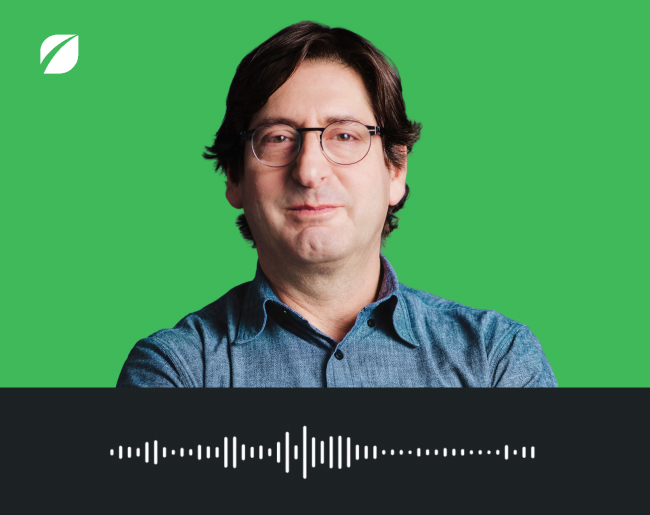
In this episode of “The Future Of,” Jeff Dance interviews Mark Groden, CEO of Skyryse, to explore the advancements in flight automation. Mark shares insights on how Skyryse is transforming the aviation industry by making flight easier, safer, and more accessible through software-defined aircraft. The conversation covers the evolution of flight controls, safety enhancements, the challenges of automation, and the future of pilot training. Key innovations include intuitive digital interfaces and systems that ensure safety, even in complex flight scenarios.
Podcast Transcript:
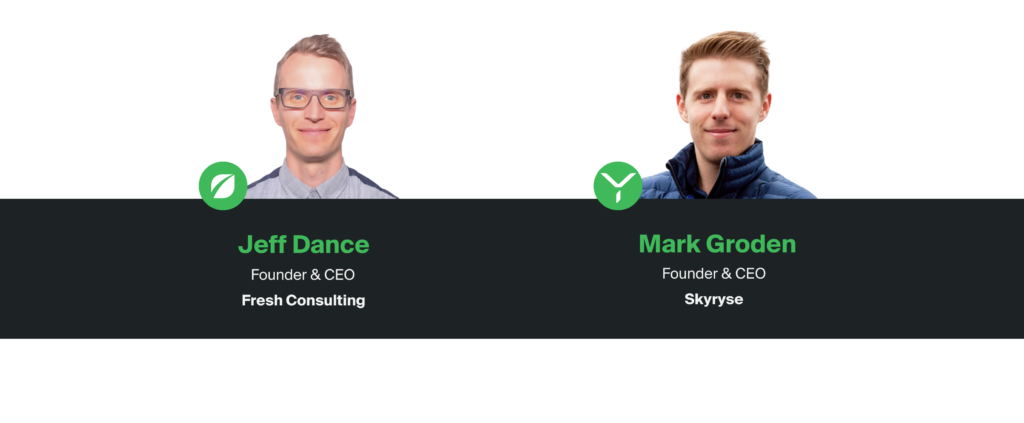
Jeff Dance: In this episode of The Future Of, we’re joined by Mark Groden, founder and CEO of Skyryse, to explore the future of flight automation. Mark, welcome to the show.
Mark Groden: Thanks for having me, Jeff. Great to be here.
Jeff Dance: Great. If you don’t mind, I’m going to do a quick intro and then ask you more about your company. I understand you have an engineering degree, and you earned a PhD in sensor-data fusion, which is really interesting. You hold 60 patents for aerial-vehicle automation—that’s impressive—and Goldman Sachs named you one of the 100 most intriguing entrepreneurs. You’re the founder of an aviation company focused on one of the industry’s number-one problems, flight safety—and on the future of automation as well. I’ve also read that Skyryse is one of the most-capitalized private aviation companies in the world. I’d love to hear more.
Mark Groden: Thanks, Jeff. Yeah. It’s really been a lifelong passion. As a teenager I started learning how to fly. Unfortunately, I experienced a tragedy: my flight instructor put the wrong control input into the aircraft, stalled at low altitude, and three generations were lost in seconds. Being a budding engineer and pilot, I opened the books and looked at the statistics. I quickly realized this sort of thing happens all the time. A lot of people point at pilot error—the leading cause of fatal accidents, about 80 percent by most measures—but pilots are rarely negligent; there’s simply too much on their plates, and the workload only increases when something on the machine goes wrong.
From that point, through school and my PhD, the idea obsessed me. While writing my dissertation, about a decade ago, I founded Skyryse. Right after defending my PhD I moved to Silicon Valley, and I’ve never had any other job. We’ve done a number of industry firsts and have strong backing—over $600 million to date—making us the most-funded private aviation company in the world.
Why Flying Stalled Out
Jeff Dance: Amazing. A lot of people have passion but not the innovation bones; others have ideas but not capital. You seem to have the whole triangle. It is a long vision, so you have to be committed—and it sounds like you’ve been committed from the get-go. When did you first become passionate about flight?
Mark Groden: I grew up in the Midwest. We’d drive five hours at a time to see family. Sitting in the back seat I thought, “There’s got to be a better way.” When I was about ten, my grandfather mailed me a 1957 Popular Mechanics article—it’s framed on the wall behind me—showing a giant flying saucer and saying that in five years we’d all be commuting in easy, safe, vertical-flight saucers because of plastics. Exactly.
Receiving that around 2000 I thought, “Man, we’re behind.” I didn’t get to see Grandpa as much as I wanted. Flight seemed like the answer. So that spurred the passion. It was always about the utility of flight: point-to-point, infrastructure-independent travel. Teleportation isn’t here yet, so flight is the best we’ve got. But it’s not easy, it’s not all that safe, and it’s not accessible.
Today the best-selling small airplane costs north of a million dollars. If you can make flight easy and safe, you can work toward a Model T moment and drive economies of scale that bring the price down. That’s why we focus on those first two elements.
Jeff Dance: My father-in-law was a test pilot in the Air Force. He remembers when software first entered planes—testing the YF-23, I think—and how that changed everything. I’m excited for him to hear this. Tell us what’s happening right now in flight automation.
Mark Groden: In the last couple of years SkyOS—our operating system that can fly any make or model airplane or helicopter—has done several industry firsts. To name a few: you swipe your finger to start the engine. You can see me do this on YouTube—it’s just like an iPhone. Once the engine’s on, you swipe up to pick up into a hover; same gesture. From there you have a stable hover, hands-free. On a map—looks a lot like Google Maps—you drop your finger on a point and press Enter, and the aircraft will fly all the way there. Then you swipe down to land.
No other airplane or helicopter does that. We also give pilots a four-axis control stick. Humans keep agency; if they change their minds mid-flight, they can take over. The stick gives you 100 percent of the machine’s performance, but it won’t let you do anything unsafe.
Because of that we’ve trained more than 100 people—pilots, non-pilots, congressmen, senators, FAA officials, even Jon Hamm while he was filming Top Gun 2. After about 15 minutes they’re in full control of a helicopter from skids-up to skids-down around Los Angeles.
A helicopter is arguably the most difficult machine on the planet to operate—let go of the controls and it tries to kill you—yet we’ve made it easy through software.
Edge-case handling in the air is different from on the ground. Cars can pull over; aircraft can’t. The ultimate edge case is engine-out in a helicopter: you descend in a semi-controlled free-fall called an autorotation, the hardest manoeuvre in aviation. We performed the first fully automated autorotation all the way to touchdown—now over 100 times—landing softly enough to take off again. That shows the automation must always work, even when things go wrong.
Choosing the Hardest Machine
Jeff Dance: I do heli-skiing and I’m always blown away by what helicopter pilots juggle. Your automation is incredible. And you’ve unified the interface for planes and helicopters. Why choose helicopters first? Because they’re harder?
Mark Groden: Exactly. If you can automate a helicopter you can automate anything. Its requirements are a superset of an airplane’s, which is more stable and has more volume, weight and power margin. Also, helicopters are about 2.5 times more valuable per pound because runway-independent vertical flight is what everyone dreams of—think flying-saucer sci-fi. If helicopters had airplane-like speed, range and payload, there’d be no reason for airplanes. But helicopters are complex and comparatively unsafe, so we tackled them first.
Jeff Dance: I like that you can go between autonomous and manual without any mode confusion.
Mark Groden: Right. Traditional aircraft have multiple flight-control modes; pilots must know which one they’re in. The 737 MAX illustrates the problems with that model. We imposed a design rule: SkyOS operates in one mode, always. Whether the engine’s healthy or dead, the stick behaves the same. If you touch the stick, you’re in charge—just like nudging a Tesla wheel disengages Autopilot.
Fixing Today’s Global Fleet
Jeff Dance: Over the last decade there’s been lots of buzz about electric vertical-takeoff-and-landing vehicles. Is the industry too focused on propulsion and not enough on the brains?
Mark Groden: The public narrative is skewed. eVTOL attention is driven by carbon and noise reduction, but those aircraft still face the same safety, complexity and cost issues. They won’t cost less than a million dollars anytime soon. We’re focused on making the existing 400,000 airplanes and helicopters easier, safer and cheaper to operate. If an eVTOL gets certified, fantastic—SkyOS can power it—but it won’t replace a Black Hawk or other large helicopter.
Jeff Dance: Given our background in industrial automation, we often retrofit existing vehicles. Is that your plan? Kits as well as full new aircraft?
Mark Groden: Both paths. First, the state of the art in cockpits is still mechanical; cables or push-pull rods translate human muscle to control surfaces. When I started, there was literally nowhere to upload code. Helicopter controls haven’t changed since Igor Sikorsky 100 years ago. So we had to build high-force electromechanical actuators, flight computers, sensors and a human-machine interface.
Because nothing like that existed off-the-shelf—and the big aerospace suppliers couldn’t hit the cost targets for general aviation—we built the entire hardware stack ourselves. Now the same actuator set, rated at over 1,000 pounds of force, works in any airplane or helicopter; we just adjust software for handling qualities. So yes, we can retrofit existing fleets and also partner with OEMs to deliver new, factory-equipped aircraft. Our first product, Skyryse One, is based on a current-production helicopter but is fundamentally different once SkyOS is installed.
Coding Out Human Error
Jeff Dance: A safety example from my search-and-rescue training: when a helicopter hovers too long, it can settle into its own downwash—vortex-ring state—and drop. How do you handle that?
Mark Groden: We prevent it. SkyOS continuously estimates state; if you approach vortex-ring conditions, it intervenes. Even if some weird airflow pushed you there, the system detects it instantly and flies you out. Envelope protection means the pilot doesn’t even need to know the term. We get asked whether we sacrifice performance, but actually we enhance it. The system knows precisely where the limits are—based on center of gravity, fuel, ambient conditions—so you can safely command right up to the edge.
Jeff Dance: Zipline’s CTO told me they use audio to detect other aircraft. How do you manage traffic?
Mark Groden: Above a few hundred feet, skies are empty. Since 2020, every U.S. aircraft must carry ADS-B Out, broadcasting its position. We receive that, plot traffic on the map, and reduce cockpit clutter so pilots can keep eyes outside. Two touch-screens and a central stick replace the old wall of gauges, giving a panoramic view. SkyOS is sensor-agnostic; we’ve flown with phased-array radar since 2018 and can integrate other sensors as needed.
Flying Through Zero Visibility
Jeff Dance: Fast-forward 10–20 years. What does flight automation look like?
Mark Groden: The future’s already here in our hangar; now it’s about scaling. As SkyOS-equipped aircraft fly personal, EMS, military and other missions, they’ll generate data that feeds a continuous-improvement flywheel. In a decade every airplane and helicopter will have software-defined controls—like seat belts or ABS for the sky.
Jeff Dance: You mentioned zero-zero take-offs and landings. Could firefighters or med-evac crews fly when they’re normally grounded?
Mark Groden: One hundred percent. We’ve been doing fully automated zero-visibility take-offs and landings for years. Traditional helicopters that inadvertently enter cloud have, on average, 56 seconds before a fatal loss of control. SkyOS doesn’t care whether it’s VFR or IFR; stability is automatic.
Rewriting the Pilot License
Jeff Dance: The term “humans on the loop” is trending—humans monitor but don’t constantly intervene. Does that describe SkyOS?
Mark Groden: The human is always in the loop as a real-time decision-maker or mission planner. We’re not at the elevator-button stage yet, but we’ve pushed workload reduction as far as appropriate with today’s tech. The system handles “aviate”; the pilot can focus on “navigate” and “communicate.” One plus one equals three.
Jeff Dance: Training requirements will change. How does that play out?
Mark Groden: FAA minimums for a private license are 40 hours, but most people need 70-80 and still have only a “license to learn.” Six out of seven students wash out. SkyOS removes the hardest part—manually keeping the machine stable—so training can focus on air-space rules and decision-making. Students could finish near 40 hours, maybe less under the FAA’s new Simplified Vehicle Operations category, and be safer pilots.
Jeff Dance: Will everyday people summon aircraft like an Uber?
Mark Groden: I think so. You won’t necessarily own the aircraft. Once machines are easy, safe, and share a common interface, entrepreneurs will launch on-demand services. Fill the seats and you approach black-car cost per seat-mile even before mass-production savings.
Keeping AI Out of Flight
Jeff Dance: Has generative AI helped? Tesla famously replaced millions of lines of code with neural nets.
Mark Groden: Not in flight-critical code. That software must be deterministic and 100 percent unit-tested. We use generative AI for paperwork or reporting to the FAA, but not for the real-time flight kernel—at least not yet.
Jeff Dance: What other converging tech excites you?
Mark Groden: Autonomous-car investment drove sensor costs down and performance up; MEMS inertial units and Moore’s-law processing let us shrink a conference-room-sized avionics bay to toaster size. When certification pathways open, better propulsion and sensing tech will flow in.
The Software-Defined Sky
Jeff Dance: Any final thoughts?
Mark Groden: The shift to software-defined flight can’t be overstated. Each single feature—swipe-to-fly, automated autorotation, our Skyler voice co-pilot—could justify a brand-new aircraft model. Together they’re transformative, and the list of possibilities is endless.
Jeff Dance: Mark, thanks for your passion and leadership. Truly impressive. What’s been most rewarding on this journey?
Mark Groden: Sharing the wins with the team. Seeing a helicopter land itself after an engine-out brought tears to our eyes. Experiences like that make a decade of work worth it.
Jeff Dance: We appreciate your insights. Thanks for joining us on The Future Of.
Mark Groden: Thank you, Jeff. I enjoyed the conversation.
More Podcasts