Article
Finite Element Analysis Services: Virtual Testing for Smarter Engineering Decisions

April 21, 2026 ...
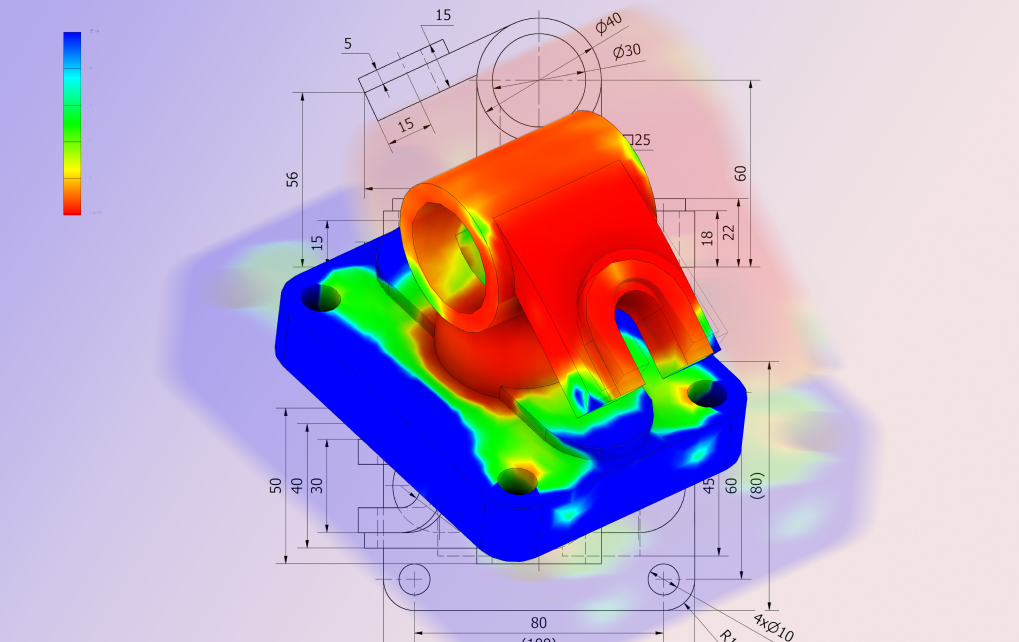
Finite element analysis (FEA) is indispensable in modern engineering. In an era where product complexity continues to increase and time-to-market pressures intensify, businesses can leverage FEA services to move faster and more reliably in validating designs before committing to expensive manufacturing.
Rather than building multiple physical prototypes and conducting costly tests, engineering teams across aerospace, automotive, manufacturing, and civil infrastructure now leverage finite element analysis services to simulate real-world conditions virtually—reducing costs, accelerating development cycles, and improving product reliability.
Bottom line, virtual testing through finite element analysis lets teams explore many more design options in software before they cut any metal.
Understanding FEA—and what to look for in engineering firms that provide FEA services—is critical for making smarter engineering decisions, not just creating prettier stress plots.
What is Finite Element Analysis?
There’s a fundamental shift in how modern engineering operates: rapid prototyping for physical products is still essential in many cases, but simulation-based design and virtual prototyping have become a new competitive baseline rather than an optional enhancement.
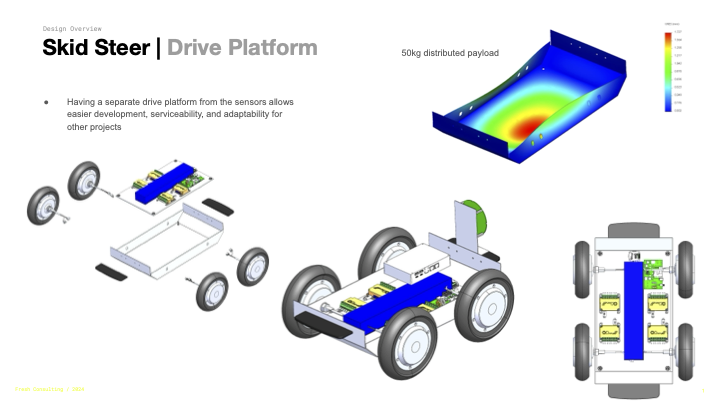
Enter Finite Element Analysis, a computational technique that predicts how products and structures will behave under real-world forces, including stress, thermal loading, vibration, fluid flow, and dynamic impacts. Rather than relying on simplified analytical equations that often fail for more complex geometries, FEA breaks down intricate structures into thousands of smaller, interconnected elements. Then, the governing physics equations are solved for each element to understand overall system behavior.
Practically, FEA is a form of engineering simulation that acts as a virtual test bench for your design, before you invest in tooling or physical prototypes.
How FEA Works: The Methodology
The FEA process follows a systematic workflow.
Phase 1: Model Creation
Engineers generally start with a 3D CAD model of the component or assembly, defining the geometry as it will be manufactured or exist in service. With regard to consulting and professional FEA services, this often means taking the client’s CAD model and aligning it with how the part is actually constrained, loaded, and assembled in the real system.
Phase 2: Meshing
The continuous geometry is divided into a finite number of smaller elements (typically tetrahedral or hexahedral shapes). The quality and density of this mesh directly impacts accuracy and computational time.
High-quality FEA consultants should perform at least basic mesh refinement or convergence checks in critical regions, rather than relying on a single, coarse mesh.
Phase 3: Material Properties
Engineers input material properties—Young’s modulus, Poisson’s ratio, density, thermal conductivity, yield strength—that govern how materials respond to applied loads.
For advanced projects, FEA consulting may also incorporate nonlinear material behavior, temperature-dependent properties, or composite layups.
Phase 4: Boundary Conditions and Loading
The model is constrained to simulate real-world supports, and realistic forces are applied (tensile loads, bending moments, pressure, thermal gradients, vibration spectra). Capturing the right boundary conditions and loading scenarios is often more important than having the “perfect” mesh—a strong FEA engineering services provider will invest time here to reflect how the part actually lives in the field.
Phase 5: Solver Execution
Advanced FEA software solves complex differential equations across all elements simultaneously, calculating stress, strain, displacement, temperature, and other physical quantities. Depending on problem complexity, runs may complete in minutes or require many hours on high‑performance computing infrastructure.
Phase 6: Post-Processing and Analysis
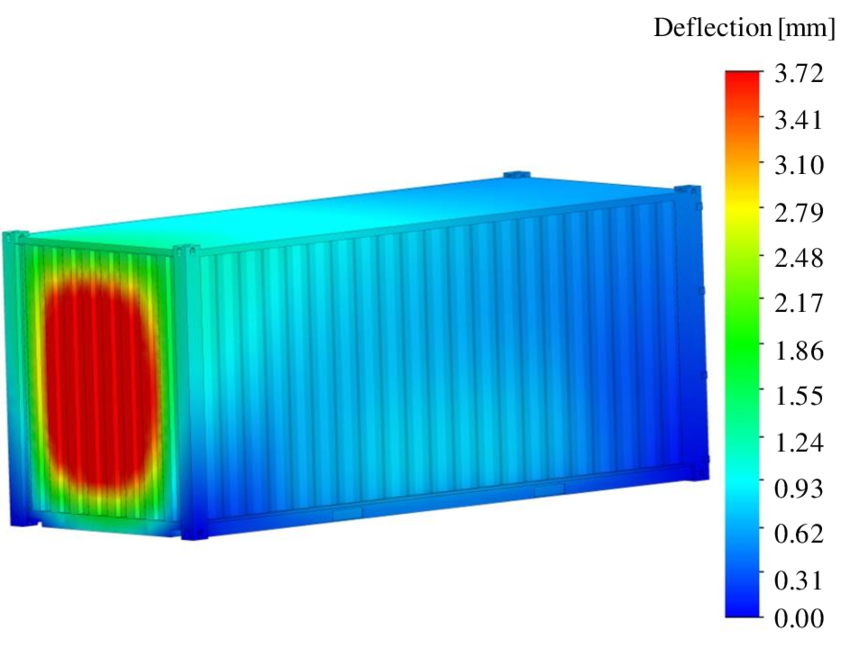
Engineers interpret results using contour plots, deformation visualizations, and numerical reports to identify critical areas and design weaknesses. Top-tier FEA services translate these results into clear design verification and design validation statements: where margins are healthy, where safety factors are low, and which design changes will have the biggest impact.
Key capabilities of FEA services
Modern FEA services encompass far more than basic stress checks.
- Structural analysis: Evaluate how components withstand static and dynamic loads, identify potential failure points, and calculate safety factors. This is foundational for structural integrity in everything from brackets to frames and pressure vessels.
- Thermal analysis and thermal management: Predict temperature distribution and heat transfer, which is critical for electronics cooling, engines, and thermal stress prediction; thermal‑structural FEA also connects hot spots and gradients to real stresses.
- Computational fluid dynamics (CFD) and fluid loading: Model fluid flow and convection (air, liquids, multiphase flows) to understand pressures, forces, and heat transfer, then use those CFD results as inputs to FEA for thermal‑structural or fluid‑structure interaction studies.
- Modal and vibration analysis: Determine natural frequencies and mode shapes, helping avoid resonance and vibration-related failures in rotating machinery, vehicles, and structures.
- Fatigue analysis: Assess component durability under cyclic loading, estimating fatigue life, and highlighting details that drive crack initiation.
- Nonlinear analysis: Capture plasticity, large deformation, contact, and other behaviors that linear methods miss, especially in crash, forming, and severe load cases.
- Multi‑physics analysis: Couple structural, thermal, and fluid phenomena—often by linking CFD and FEA—to evaluate thermal‑structural problems or full fluid‑structure interaction in e‑mobility, aerospace, and high‑power electronics.

How Finite Element Analysis Consulting Works: A Step-by-Step Process
Professional FEA service providers follow a structured workflow to ensure accuracy, relevance, and actionability of the ongoing analysis.
Step 1: Problem Definition and Consultation
An FEA consulting engagement typically begins with discussions between the service provider and client engineers. The FEA consultant must understand:
- What design questions need answering (for example, “Will this bracket fail under 5g loading?”)
- Which loads and environmental conditions are critical
- Applicable regulatory or industry standards (ASME, FAA, ISO, etc.)
- Required accuracy and acceptable safety factors
- Project timeline and budget constraints
This prevents wasted effort on unnecessary analysis and ensures the simulation scope matches business objectives. A strong FEA services partner behaves like an engineering consultant by challenging assumptions and helping sharpen the questions clients are asking.
Step 2: CAD Model Preparation and Simplification
In the next stage, an engineer receives or creates a 3D CAD model, often simplifying geometry to reduce computational cost while preserving critical features. The team determines things such as which details materially affect stress distribution, which can be idealized or removed, and whether symmetry can reduce element count—that is, where modeling a fraction of a part or assembly can lead to a smaller mesh (fewer finite elements) and potentially, cheaper, faster analysis.
However, experienced finite element analysis consulting teams must spot where simplification is safe, or where oversimplification will hide important problems that must be addressed.
Step 3: Mesh Generation
The geometry is separated into elements. For nonlinear problems, contact regions, or stress concentrations, finer meshes are required. Engineers perform mesh convergence studies, refining the mesh until key results stabilize.
Asking how a provider approaches mesh convergence is one of the fastest ways to gauge whether their FEA analysis services are robust or superficial.
Step 4: Material and Boundary Condition Definition
Material properties are assigned to each region (metals, composites, polymers), and boundary conditions are applied: supports, loads, temperatures, and contact between parts.
This is often where good simulation-based design lives or dies: if boundary conditions and loads don’t reflect reality, even the most sophisticated FEA services will produce misleading answers.
Step 5: Simulation Execution
The FEA solver processes the model, typically on high-performance computing resources. Linear static analyses may complete in minutes; nonlinear, dynamic, or multi-physics runs can require hours or overnight processing.
For many organizations, outsourcing FEA services is the most practical way to access this kind of compute capacity without large capital investments.
Step 6: Results Analysis and Reporting
Raw simulation output should be distilled into actionable insights:
- Where peak stresses occur, and why
- How stresses compare to allowable limits
- Safety factors at critical locations
- Whether the design meets performance criteria
- Recommended design modifications
Professional reports include contour plots, summary tables, explanations of assumptions and limitations, and prioritized recommendations. High-quality finite element analysis consulting also makes it clear how much confidence you should place in the results and where assumptions might limit conclusions.

Typical deliverables from Finite Element Analysis services
Depending on scope, deliverables typically include:
- Detailed analysis report with methodology, assumptions, and conclusions
- Stress and deformation visualizations
- Numerical tables and safety factor calculations
- CAD files showing proposed design improvements
- PE-stamped reports for regulated applications
- Supporting documentation on modeling choices and validation
- Recommendations for design refinement or optimization
Some FEA analysis companies also provide live review sessions. Fresh, for example, will always empower your team can ask questions, challenge assumptions, and connect virtual testing results back to real-world constraints.
Structural Analysis, Safety, and Reliability
Structural analysis—the evaluation of how structures respond to applied loads—is one of the most critical applications of FEA. Whether dealing with civil structures like buildings and bridges or aerospace structures and pressure vessels, these structures must all withstand anticipated loads with proven safety margins. In many cases, FEA-driven structural analysis services are the only practical way to demonstrate structural integrity for complex geometries and load paths.
Early Design Flaw Detection
Rather than discovering structural weaknesses during physical testing—when tooling may be ordered and manufacturing processes locked in—FEA reveals problems during the design phase when changes remain inexpensive.
A bracket, for example, can be analyzed, stress concentrations visualized, and thickness or geometry adjusted before the first physical part is made. This “shift-left” approach to validation is a hallmark of modern simulation-based design and virtual prototyping and has the potential to save weeks of product development work and substantial costs.
Ensuring safety under real-world conditions
FEA allows engineers to model operational scenarios that are difficult or impractical to test physically. Examples include:
- Combined thermal and pressure loads — for example, an elbow in an industrial steam pipeline that experiences high internal pressure steep temperature gradients; FEA can be used to assess peak stresses at the bend and flange connection
- Rare seismic events — imagine a hospital’s emergency generator frame, being modeled under a code‑defined “maximum considered earthquake,” which verify that supports and anchor bolts survive regardless of seismic pressure
- Long-term vibration — aircraft avionics racks are subjected to continuous engine-induced vibration over thousands of flight hours; in this case, FEA can be used for fatigue life estimation at critical points like fastener holes and corner brackets
- Multi-load-case environments — offshore wind turbines must be assessed for multiple load cases: extreme storm wind, wind plus wave loading, maintenance crane loads, and more, all of which can be managed within an FEA model
There are dozens of other practice real world examples where FEA is essential. The common theme across all scenarios is that through comprehensive simulation, engineers can ensure structures remain safe and reliable across their operational envelope, without needing bespoke physical test for every case.
Material selection and optimization
FEA enables rational material selection and design optimization. Engineers can compare how different materials and thicknesses affect stress, deflection, and safety. They can also identify where material can be removed and quantify cost‑performance tradeoffs. When paired with experienced FEA consulting, these studies feed directly into weight reduction and cost‑reduction programs without sacrificing safety.
Environmental and operational conditions
Modern FEA extends beyond static loads to capture environmental complexity.
- Thermal effects: Thermal FEA models temperature-driven expansion, contraction, and thermal stresses across operating conditions, which is especially critical in power electronics, battery packs, and high-density boards.
- Dynamic events: FEA simulates loading, impacts, and other transient phenomena, ensuring adequate stiffness and energy dissipation.
- Vibration and modal behavior: Modal analysis identifies resonant frequencies and mode shapes so designs can avoid operating conditions that amplify vibration.
For many organizations, this level of scenario coverage would be impossible without virtual testing.

Where FEA services add the most value
Across industries, finite element analysis services tend to drive the most value in a few repeating patterns:
- Complex, safety-critical structures (airframes, pressure vessels, large frames) where conservative hand calculations would be excessively heavy or vague.
- High-cost prototypes (capital equipment, automotive crash bodies, aerospace hardware) where virtual iterations significantly reduce the number of physical builds.
- Thermal and structural reliability problems (electronics cooling, battery packs, engines) where multi-physics FEA is needed to understand interactions.
- Weight and cost reduction programs, especially in aerospace, automotive, and mobile equipment, where small percentage improvements compound over many units and long service lives.
Rather than replacing physical testing or other critical mechanical engineering processes, FEA services redirect resources and team utilization: more virtual exploration early, and focused physical tests for final validation and certification.
Selecting the right finite element analysis service provider
Outsourcing FEA work requires selecting a provider capable of delivering accurate, actionable results.
Expertise and relevant experience
Always evaluate an FEA service provider’s history with projects similar to yours in complexity, industry, and analysis type. Look for examples of aerospace, automotive, civil, or product development work that align with your domain. Analyst credentials matter as well: PE licenses, advanced degrees, and hands-on design experience signal engineering judgment that goes beyond software operation.
Software, technology, and infrastructure
Leading providers use industry-standard tools such as Ansys Mechanical, Abaqus, COMSOL, or Nastran, each with strengths in structural, thermal, nonlinear, or multi-physics analysis. Ask which platforms your prospective FEA partner uses—and why. Also ask about high-performance computing and cloud FEA resources, especially if you expect large assemblies, nonlinear contact analysis, or transient analysis.
Collaboration and communication
Strong FEA services look like collaboration, not a black box. You should expect:
- Clear scoping and alignment on questions and constraints
- Regular progress updates and opportunities to redirect analysis
- Transparent documentation of modeling choices, validation steps, and limitations
At Fresh, our engineers explain tradeoffs and results in plain language, enabling straightforward collaboration and empowering your team to make impactful engineering decisions in the future.
Regulatory and code compliance
If your work touches regulated domains, confirm that the provider is fluent in standards such as ASME Boiler & Pressure Vessel Code, FAA/EASA guidance, and relevant industry codes. For many pressure vessel and infrastructure projects, design by analysis and PE‑stamped reports are mandatory.
FAQ: Evaluating FEA Service Providers
What should I look for in a finite element analysis services provider?
Look for a mix of relevant domain experience, proven FEA services work (case studies, references), and strong engineering judgment, not just tool proficiency. You want a team that can challenge your assumptions, propose realistic virtual testing scenarios, and explain results clearly.
How do I know if I can trust FEA results?
Ask how the provider validates their models: comparisons against physical test data, hand calculations, or recognized benchmarks; mesh convergence checks; and documented assumptions. A credible partner can walk you through the confidence level of key results.
When does it make sense to outsource FEA services versus building an in‑house capability?
Outsourcing is often ideal when your analysis needs are intermitten, where specialized expertise is required, or when you need access to advanced multi-physics and HPC infrastructure without investing in licenses and hardware.
Many teams adopt a hybrid approach—routine checks in‑house and complex studies with external consultants.
What information do I need to provide to FEA consultants?
Providing 3D CAD geometry, key loads and boundary conditions, material specifications, design allowables, and any relevant test data or field experience is a good first step. The more context you share about how the part is used, the more realistic and decision-ready the virtual testing will be.
The Evolving Landscape: FEA and Digital Transformation
The FEA field continues to evolve alongside digital engineering.
Cloud-based FEA has lowered the barrier to advanced analysis by making powerful solvers and hardware available on demand.
AI-assisted meshing, AI/machine learning-assisted optimization, and pattern recognition are being leveraged for large result sets. Digital twins incorporate FEA models into live, data-driven representations of assets in the field. Multi-physics capabilities continue to mature as products blend structural, thermal, fluid, and electromagnetic behaviors.
These trends make FEA increasingly accessible and raise expectations: more teams now expect their partners’ finite element analysis services to connect into broader simulation and data workflows, not exist as one-off reports.

Making Finite Element Analysis services central to your engineering strategy
Finite element analysis has evolved from a niche tool used only by large aerospace and automotive companies into an essential capability across industries. Organizations that leverage FEA effectively as a part of their product strategy gain advantages in development speed, cost, reliability, and risk management.
Whether you’re designing new products, troubleshooting performance issues, optimizing existing designs, or validating compliance with regulatory standards, finite element analysis services provide the virtual testing foundation that smarter engineering decisions require. The investment in quality FEA services—whether through in-house capabilities, external consultants, or a hybrid model—pays dividends through accelerated innovation, fewer physical prototypes, and products that perform reliably in real-world service.
If you’re exploring comprehensive finite element analysis services or considering outsourcing FEA for an upcoming project, our engineering team can help you define the right virtual tests, interpret the results, and connect them directly to confident design decisions.
Contact our FEA experts to accelerate your project timeline, reduce costs, and deliver engineering confidence in your designs.