Article
Why Spec-Driven Development Breaks Down in Real Projects

May 12, 2026 ...
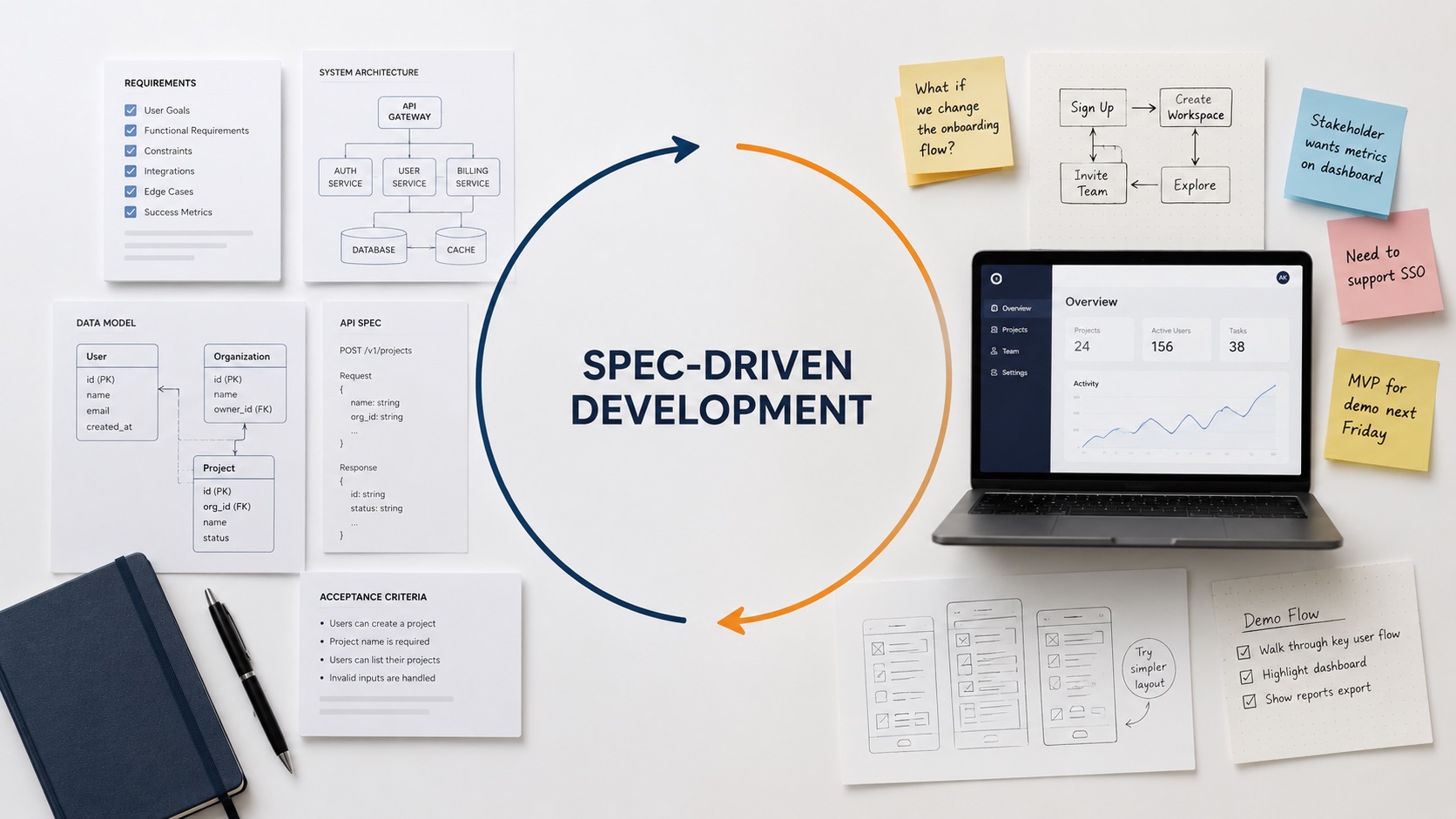
There’s a growing belief that AI will push software development toward a more Spec-Driven Development (SDD) future.
The idea makes sense on paper.
If AI can reliably generate code from detailed requirements, then the quality of the output increasingly depends on the quality of the specification itself. In theory, better specs produce better software.
And honestly, that part is true.
The problem is that many real-world projects are not stable enough for clean specification-driven workflows to hold together for very long.
That’s the part I think many conversations are missing right now.
The rise of Spec Driven Development
Tools like Cursor, Claude Code, Windsurf, and OpenAI Codex are changing how teams prototype and build software.
Developers are increasingly working through:
- Structured prompts
- Architecture notes
- Markdown specs
- AI-generated implementation plans
- Agent-driven workflows
Instead of manually wiring every component from scratch, teams are describing intent and iterating against generated output.
This is creating a new kind of workflow where specifications are no longer just documentation for humans.
They are executable instructions for machines.
That changes the economics of software development.
A well-written specification can suddenly:
- Generate working UI
- Scaffold backend services
- Create database schemas
- Wire APIs together
- Generate tests
- Accelerate prototyping dramatically
The clearer the specification becomes, the more leverage the team gets from AI-assisted development.
That’s real.
But there’s another side to this.
Real projects are rarely stable environments
A lot of Spec Driven Development conversations assume requirements are relatively stable.
In reality, many delivery teams operate in environments where priorities constantly move underneath them.
I’ve seen projects completely change direction because:
- A new engineering leader joined halfway through
- Previously hidden technical constraints surfaced late
- A stakeholder changed organizational priorities
- Budgets shifted
- Security requirements appeared unexpectedly
- A surprise executive demo suddenly became the top priority
- Investor presentations forced teams to optimize for visibility instead of architecture
None of those situations are unusual.
They’re normal.
Especially in consulting environments, enterprise software, innovation teams, and early-stage product development.
This creates a difficult tension.
AI performs best when instructions are clear and stable.
But many real-world software projects are structurally unstable.
The hidden flaw in treating specifications as truth
One thing AI is very good at is filling in gaps.
If a specification is incomplete, the model will often make assumptions and continue forward confidently.
That can feel productive initially.
Until you realize the generated implementation quietly encoded decisions nobody actually agreed on.
The uncomfortable reality is that many specifications are incomplete because the humans involved haven’t fully thought through the edge cases yet.
That includes:
- Stakeholders
- Product owners
- Designers
- Architects
- Engineering leads
- Executives
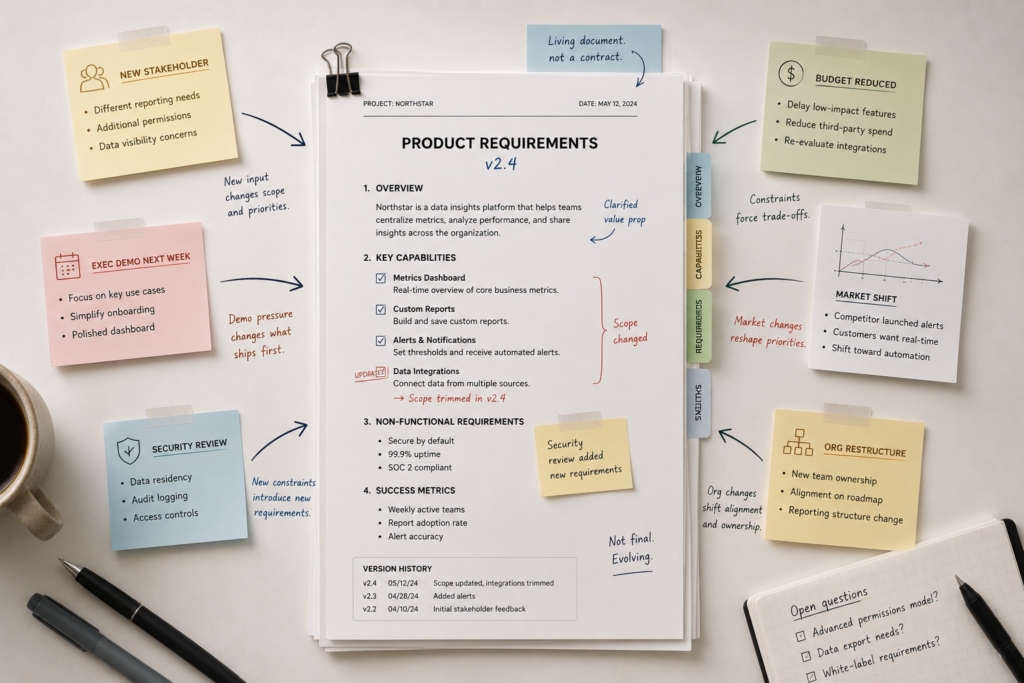
Specifications are often snapshots of current understanding, not permanent truth.
And current understanding changes constantly during software development.
That’s why treating specs as fixed contracts can become dangerous.
Especially when AI accelerates implementation speed faster than alignment speed.
Proof of concepts are becoming more important, not less
Ironically, AI may increase the value of rapid prototyping even as Spec Driven Development gains popularity.
Why?
Because prototypes expose ambiguity faster than documents do.
A loosely written prompt paired with a working proof of concept can surface:
- Workflow problems
- Usability issues
- Hidden assumptions
- Missing requirements
- Organizational disagreements
- Unrealistic expectations
much earlier in the process.
Sometimes stakeholders don’t fully understand what they want until they can interact with something tangible.
AI dramatically lowers the cost of creating those interactive artifacts.

That changes team behavior.
Instead of spending weeks refining perfect specifications upfront, teams can:
- Generate rough implementations quickly
- Pressure test assumptions earlier
- Use prototypes to refine requirements
- Iterate toward clarity collaboratively
In many situations, I think this becomes more effective than attempting to define every edge case upfront before anything exists.
The future probably isn’t “spec-first” or “prototype-first”
I think the future is more cyclical.
Something closer to:
- Rough specification
- AI-generated prototype
- Stakeholder feedback
- Refined specification
- Regenerated implementation
- Operational validation
- Production hardening
Over and over again.
The specification becomes a living system instead of a static artifact.
And importantly, the specification itself increasingly evolves through interaction with AI-generated outputs.
That’s a very different workflow than traditional enterprise documentation processes.
Product teams and project teams behave differently
This is another important distinction that often gets ignored.
Spec Driven Development tends to work better when:
- The domain is mature
- Workflows are well understood
- Organizational structure is stable
- Ownership is long-term
- Iteration cycles are predictable
That’s often true in mature product organizations.
But project-based environments behave differently.
Consulting teams, innovation labs, enterprise transformations, and custom software engagements often experience:
- Shifting stakeholder groups
- Evolving requirements
- Incomplete discovery
- Compressed timelines
- Political pressure
- Competing priorities
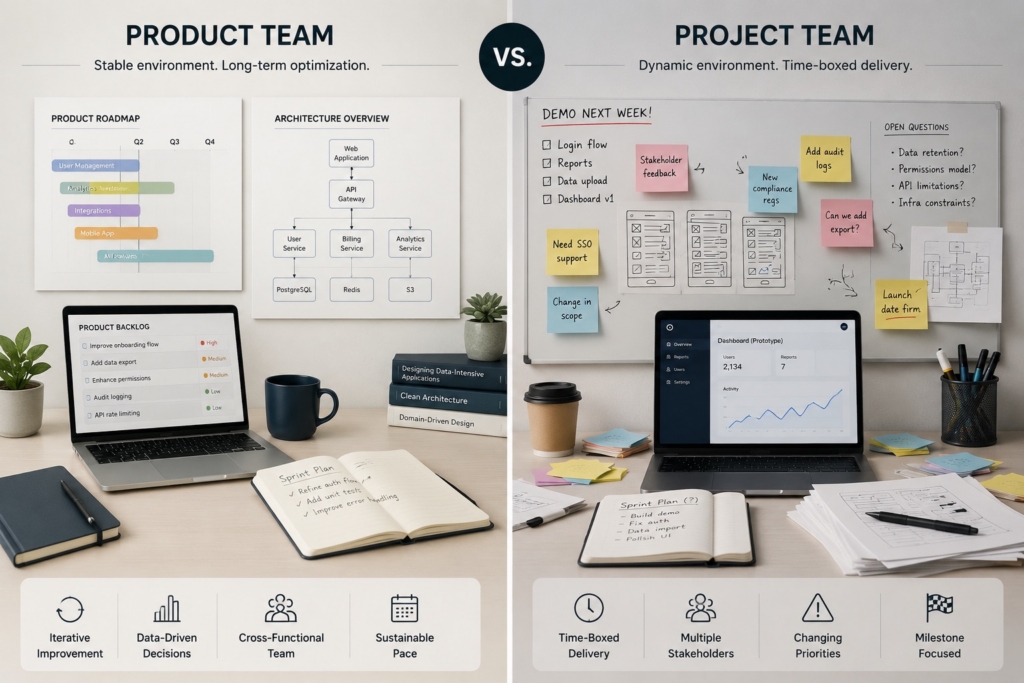
In those environments, adaptability matters more than specification purity.
The best teams are often the ones that can absorb ambiguity without collapsing delivery velocity.
AI helps with that too.
Not because it eliminates uncertainty, but because it reduces the cost of responding to uncertainty.
AI changes the cost structure of software development
This is probably the bigger story underneath all of this.
AI is reducing the cost of:
- Prototyping
- Experimentation
- Refactoring
- Implementation
- Iteration
That doesn’t eliminate the need for thinking.
If anything, it increases the importance of:
- Judgment
- Systems thinking
- Communication clarity
- Prioritization
- Stakeholder alignment
The bottleneck shifts away from pure implementation and closer toward decision-making quality.
That’s why I think software development is entering a strange transition period.
Teams that only optimize for velocity may generate large amounts of unstable software very quickly.
But teams that combine:
- Strong technical judgment
- Fast prototyping
- Adaptable architecture
- Evolving specifications
- Clear communication
will probably outperform everyone else.
Not because they write better prompts.
Because they understand that software development was never just about writing code in the first place.