Elisha Terada

AI Agent Development, AI Strategy, Web App Development
WebMCP Implementation: Connecting AI to Your Internal Apps
Explore WebMCP implementation for internal apps, current provider support, security controls, and how to test whether AI-assisted workflows deliver business value.
Read Now

AI Agent Development, AI Strategy, AI/Machine Learning, AI/ML, Artificial Intelligence, Business Strategy
AI Can Help You Build Software. It Cannot Be Accountable for the Outcome.
AI makes software development faster and more accessible, but speed is not the same as delivery. Organizations still need clear ownership, sound decisions, and accountability for results.
Read Now

AI Agent Development, AI Strategy, AI/Machine Learning, AI/ML
The AI Prototype Trap: When a Working Demo Isn’t a Working Business Solution
A polished AI prototype can make the future feel close. But a working demo is not the same as a deployable enterprise AI solution. A growing number of business leaders arrive with something exciting: an AI prototype. They may have built it themselves with an AI tool. It has a polished interface. It responds to
Read Now
AI Agent Development, AI Strategy, AI/Machine Learning, AI/ML, Digital Transformation, Generative AI
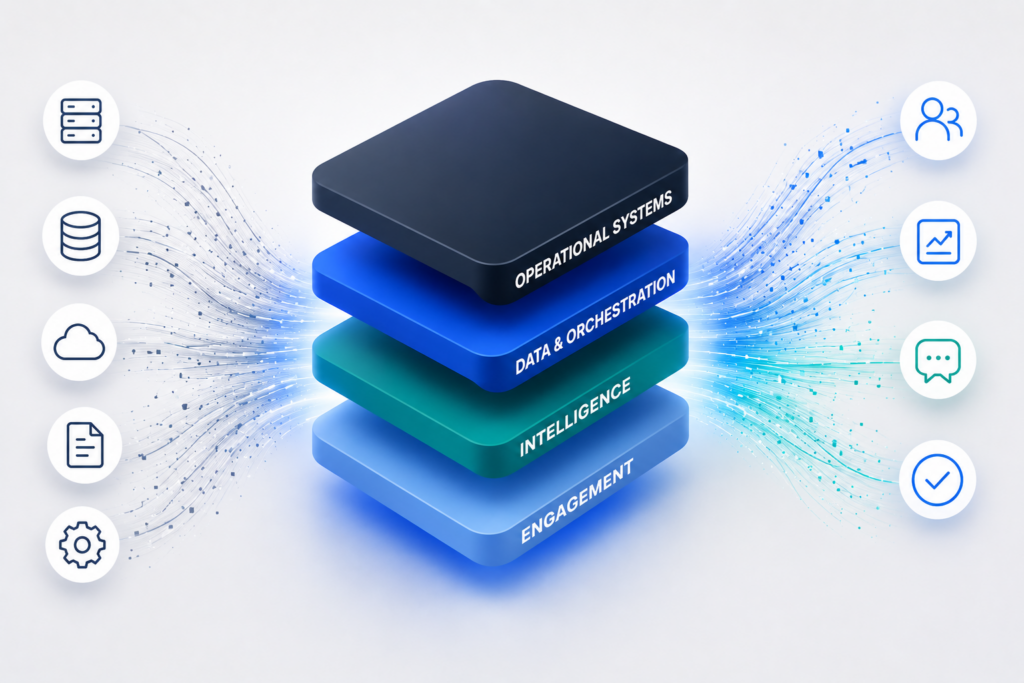
Why Most Enterprise AI Initiatives Stall Before They Start
Most organizations are trying to build the AI interface first while the operational and data layers underneath it still aren’t ready. The chat interface is often the easiest part of enterprise AI. Making the organization understandable to machines is the hard part. The AI demos looked straightforward. Connect the data. Add a copilot. Ask questions.
Read Now
AI Agent Development, AI Strategy, AI/Machine Learning, AI/ML, Generative AI, Software, Technology Architecture, Web App Development
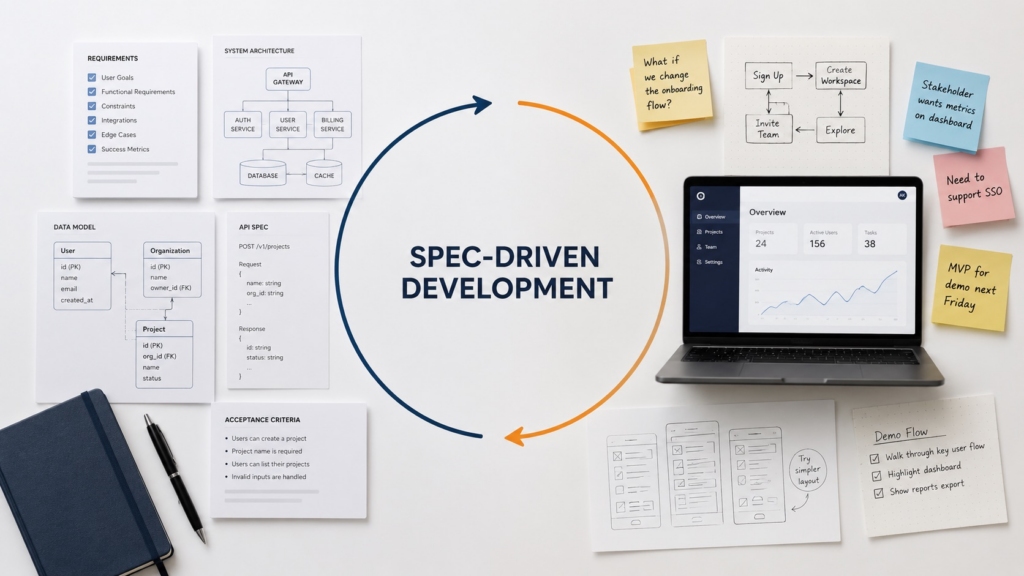
Why Spec-Driven Development Breaks Down in Real Projects
Spec Driven Development is gaining momentum in the AI era as tools like Cursor, Claude Code, and Codex turn specifications into executable inputs for software generation. But while detailed specs can accelerate development, many real-world projects operate in unstable environments where requirements shift constantly. This article explores why Spec Driven Development works well in mature product teams, where it breaks down in fast-moving project environments, and how AI is changing the economics of prototyping, iteration, and requirements discovery.
Read Now
AI Strategy, AI/ML, Generative AI, Software, Systems Design, Technology Architecture, Web App Development, Website Development
Turning Your Codebase Into Stakeholder-Ready Documentation with AI
Treat your codebase, PRs, commit history, and AI conversations as a structured work diary so AI can synthesize accurate, stakeholder-ready documentation on demand. AI can parse repositories and reasoning trails to produce drafts (security controls, data flows, architecture) and, critically, surface gaps that indicate product or clarity issues. Implement this by structuring the codebase, generating periodic AI-driven reports, and using discrepancies as a forcing function for improvements. The result is reduced reactive overhead, preserved institutional memory, and tighter alignment between engineering work and stakeholder visibility.
Read Now