Miso Robotics
Autobev “Sippy”

Engineering a cost‑efficient robotic beverage system for fast food
Background
Miso Robotics focuses on food and beverage automation systems that streamline operations in fast food restaurants. They partnered with Fresh to rapidly engineer and fabricate a new automated beverage system proof of concept, built in-house from the ground up.
Challenges
Fast food operators needed a beverage system that reduced manual labor, kept BOM costs low, and automated cup handling in a reliable, repeatable way.
We faced three main challenges from the outset:
- Reducing front‑of‑house labor required for beverage preparation
- Minimizing BOM cost for high‑volume production
- Designing dependable, low‑cost automation for singulating cups and detecting when each drink was full
Services & Capabilities









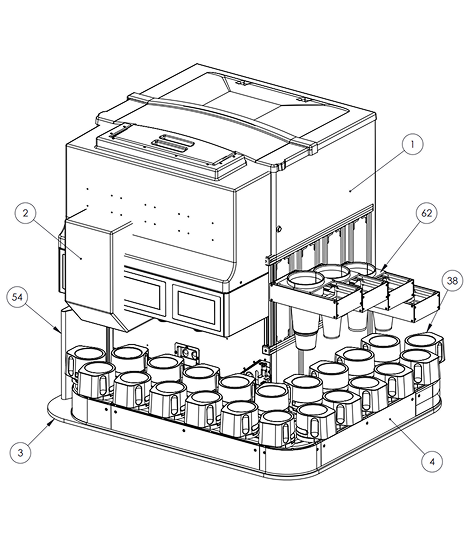
Defining an adaptable system architecture
After working with the Miso team to better understand common challenges in food and beverage automation, Fresh began by creating an overall layout for the beverage system and breaking the problem into discrete automated stations, including cup singulation, sealing, and filling.
By treating each station as an independent engineering challenge, the team could iterate quickly while ensuring the whole system would scale to production.
From the start, every design decision emphasized adaptability so the machine could work across major fast food chains with different cup formats and beverage offerings.
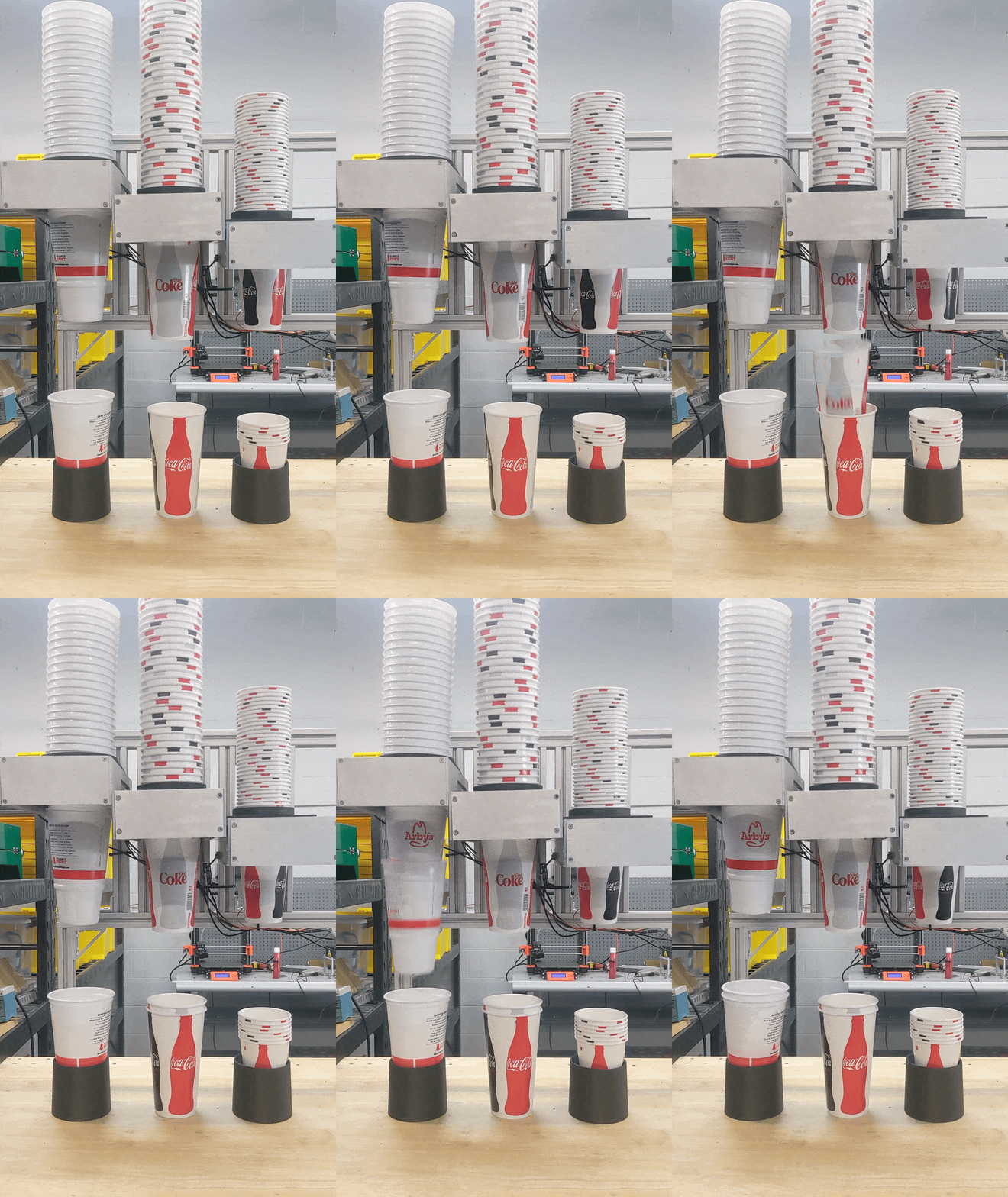
Proving out each station in hardware
The team moved quickly into rapid prototyping, building manual and semi‑automated solutions for each station to validate core mechanisms before integrating them.
Leveraging our end-to-end design and engineering processes, mechanical, electrical, and firmware engineers collaborated to test cup handling, sealing, and filling workflows in real hardware.
Ultimately, this integrated approach shortened feedback loops and yielded the data necessary to make informed design decisions.
By identifying failure modes early, refining designs, and converging on robust mechanisms that could withstand the demands of a busy restaurant environment, we were able to capitalize on what rapid prototyping does best:
- Validating designs
- Reducing risk
- Accelerating project timelines
All while staying in budget.
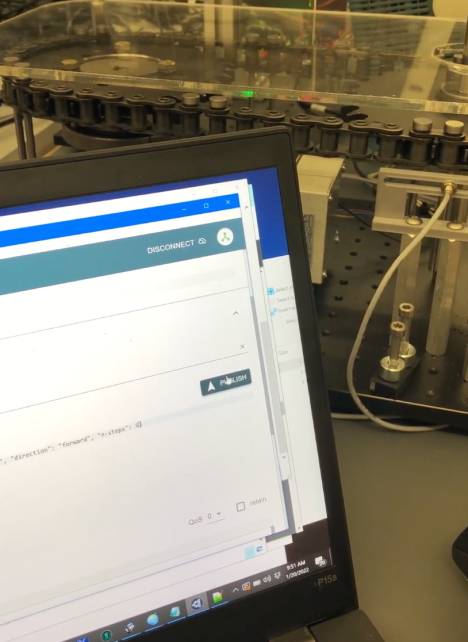
Building a GUI around the proof of concept
Once the core stations were validated, Fresh created a GUI to control and monitor the beverage automation proof‑of‑concept system as a cohesive whole.
The interface gave operators clear visibility into system status while enabling engineers to tune behavior and gather data during testing. User feedback from on‑system testing fed directly into updates to the product requirements document (PRD), ensuring the roadmap captured real‑world operational needs.
Integrating digital and physical systems is central to Fresh’s approach. The success of the Miso project illustrates the value of having cross-disciplinary capabilities under one roof—in this case, to deliver meaningful innovation in the food and beverage automation space.
Design for Manufacturability: Engineering for volume and cost
With a working POC in place, engineers refocused on design for manufacturability to make the system viable at scale. The Fresh team explored low‑cost instrumentation solutions and sheet metal‑friendly constructions, even adapting the design when a customer requested a predominantly sheet metal build.
By collaborating with vendors to optimize parts and pricing, the team aligned the design with high‑volume manufacturing realities while preserving performance. Balancing food and beverage automation goals against design constraints allowed us to transition seamlessly from concept to production intent.
1
Proof of concept demonstrating automated beverage preparation, meeting strict cost and reliability targets
250
Drove system BOM cost below 250 dollars per unit, satisfying customer goals

