Article
Right to Repair: Compliance to Advantage

March 19, 2026 ...
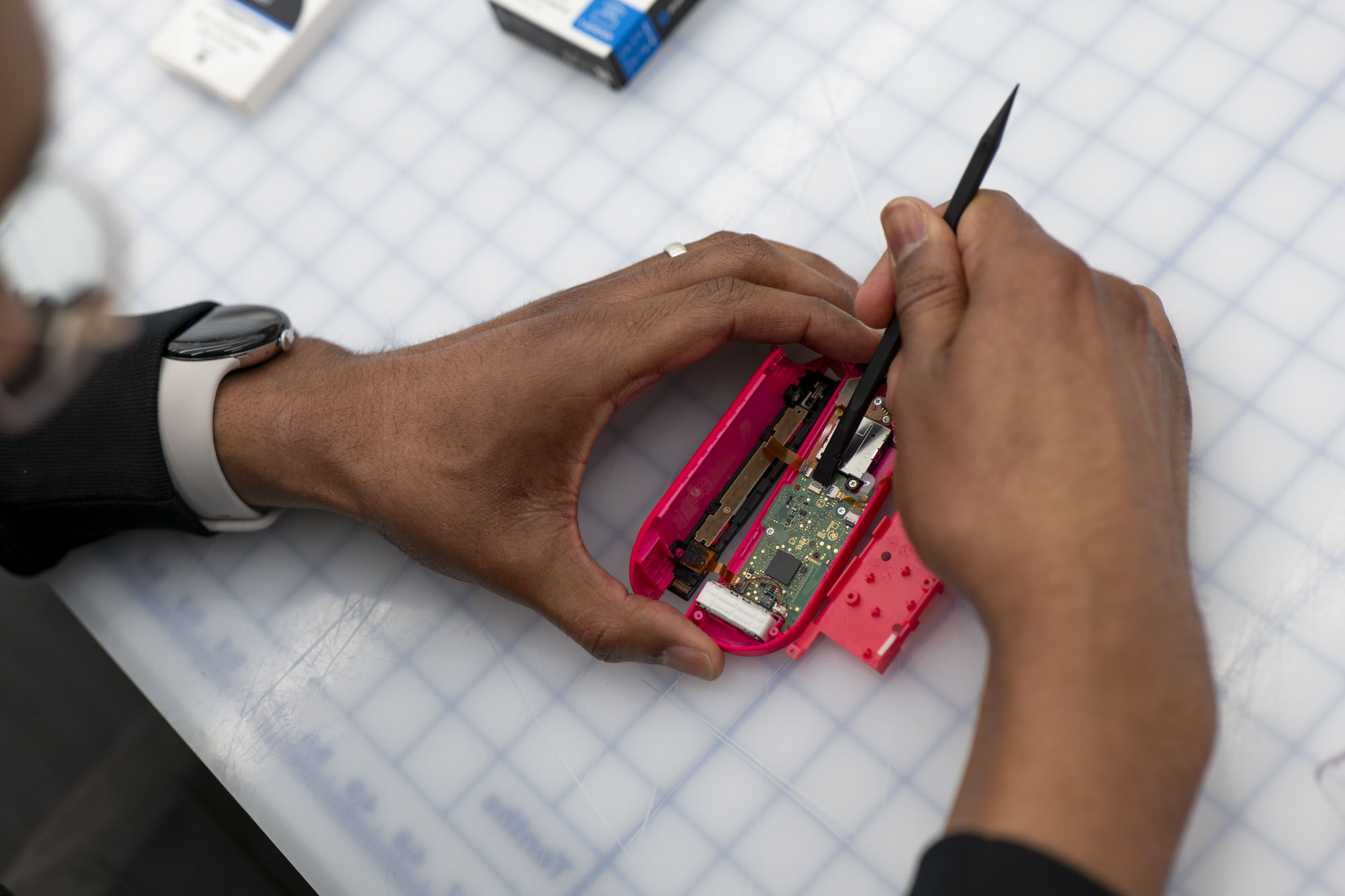
The disposable era of hardware is, thankfully, coming to a close. Right to Repair laws are sweeping the globe, and as of 2026, roughly one-third of the U.S. population is now covered by state-level mandates. These laws require manufacturers to provide the same documentation, parts, and diagnostic tools to owners that they provide to their own authorized technicians. For those of us in the hardware industry, this is a seismic shift in how we must think about, design, and support the products we put into the world.
As an industrial designer, I love a good gadget. But the frustrating reality is that most products are manufactured destined for the landfill. Too often, a device is retired not because it’s obsolete, but because a single component failed and the repair path was blocked by unavailable parts, prohibitive pricing, or a total lack of guidance.
Take the Nintendo Switch, for example. It’s a handheld I’ve loved for years, yet it remains a notorious repairability example—specifically “Joy-Con drift,” where degrading internal sensors inevitably trigger phantom inputs. For nearly a decade, Nintendo has stuck with traditional carbon-film potentiometers—sensors that rely on physical friction and are destined to wear down—instead of switching to contactless Hall-Effect or TMR (Tunneling Magnetoresistance) sensors. I’ve sent my own controllers back to Nintendo multiple times for their “free” repair service, a concession they made only after facing mounting legal pressure. But think of the cost: the thousands of controllers tossed in the trash by frustrated parents, the carbon footprint of shipping millions of controllers back and forth, and the brand trust eroded by a known, preventable defect.
After five drift repairs and a recently discovered “spicy pillow” (an expanding battery), I decided to stop patching the symptoms and permanently solve the problem. Using resources from communities like iFixit, I’ll walk you through a definitive fix for these common failures. More importantly, we’ll examine the shifting legal landscape and provide a roadmap for building repairable products—proving that Right to Repair isn’t just a compliance hurdle, but a massive business opportunity for the next generation of hardware.
Changing regulatory landscape
The current regulatory landscape for repairability is a complex patchwork of state-level mandates in the US (CO, MN, CA, and others) and overarching directives in the EU, yet it signals a unified global shift toward a circular commercial reality. The cumulative pressure is forcing manufacturers to abandon proprietary “lock-in” strategies in favor of open repair ecosystems. As a result of this fundamental global market shift, repairability is becoming a primary driver of brand trust and long-term profitability. As these laws converge, the manufacturing industry is moving away from the “take-make-dispose” model toward a system where products are treated as long-term assets rather than disposable commodities.
Requirements for a US product launch (2026)
As an example, let’s look at what is required for a product intended for sale across all 50 states in 2026:
- Access to Resources: Manufacturers must provide owners and independent repair shops with the same parts, specialized tools, and diagnostic documentation offered to authorized service providers on “fair and reasonable” terms.
- Parts Pairing Ban: Manufacturers are prohibited from using software “parts pairing” to block the installation of third-party components or to display misleading “unidentified part” warnings.
- Longevity Obligations: Manufacturers must ensure parts and documentation remain available for at least seven years for products costing $100 or more.
- Software and Firmware: Manufacturers are required to provide software tools for diagnosis and repair at no charge, ensuring firmware doesn’t act as a barrier to independent maintenance.
Additional requirements for the EU market
If the product is also sold in the EU, it faces these additional mandates starting in July 2026:
- Mandatory Repair Service: Manufacturers must offer repair services for specific product categories (like smartphones and appliances) even after the legal warranty period has expired.
- Warranty Extension: If a consumer chooses repair over replacement for a defective product, the legal guarantee must be extended by an additional 12 months.
- Digital Product Passport (DPP): Products must be equipped with a Digital Product Passport, which provides a digital identity card for products, containing sustainability data and disassembly instructions.
- Destruction Ban: Large enterprises are prohibited from destroying unsold consumer goods (initially clothing and footwear, with electronics expected to follow), requiring instead that they be repurposed or recycled.
Upcoming requirements (2027 and beyond)
Current regulations mark the start of a permanent global transition toward a circular economy that will continue to accelerate through 2030 via annual expansions of repairable product lists and new mandates for user-replaceable batteries and standardized repairability scoring. Although cost-conscious manufacturers may attempt to limit expanded warranties or services to specific mandated regions, the fundamental product redesigns necessitated by the Right to Repair movement will likely trigger broader, global implementation that benefits consumers regardless of their location.
Making devices more repairable: Key improvements
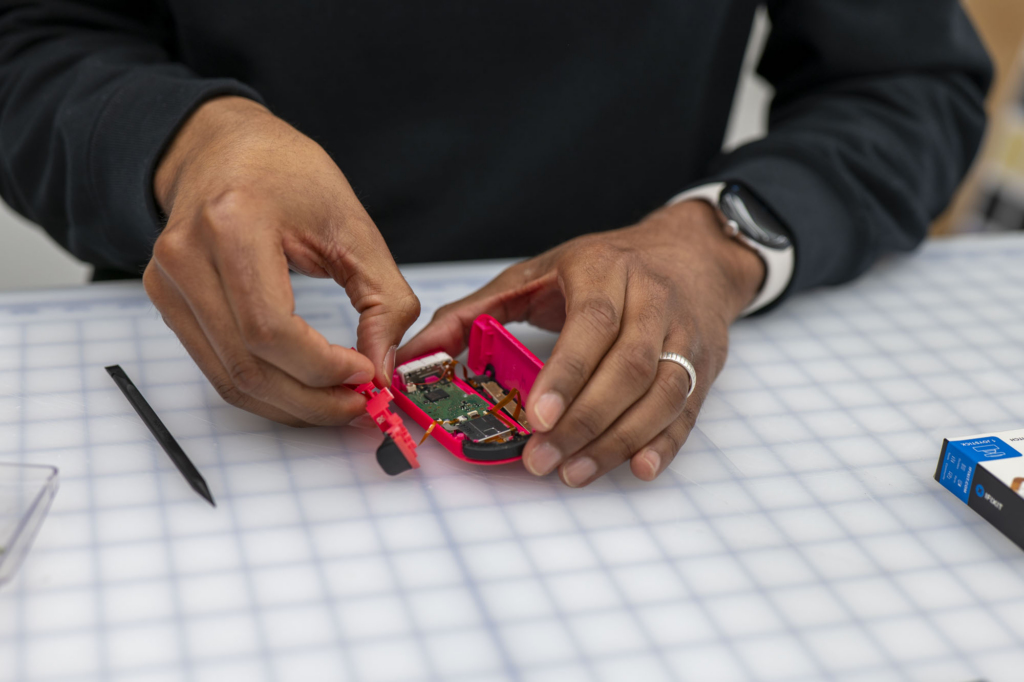
Returning to my Nintendo Switch repair, last year iFixit—the premier consumer repairability resource—halved the console’s repairability score from an 8 to a 4 out of 10. They specifically condemned repairability hindrances such as: the use of glued-in batteries, the soldering of high-wear components like the USB-C charging port directly to the mainboard, and a fragile architecture reliant on delicate ribbon cables. However, the primary complaint was a total lack of official manufacturer support; specifically, Nintendo’s refusal to sell official replacement parts or provide public repair manuals for the console.
Beyond what is legally mandated, manufacturers can make their products easier to repair and support by implementing the following practices:
1. Mechanical fasteners over adhesives
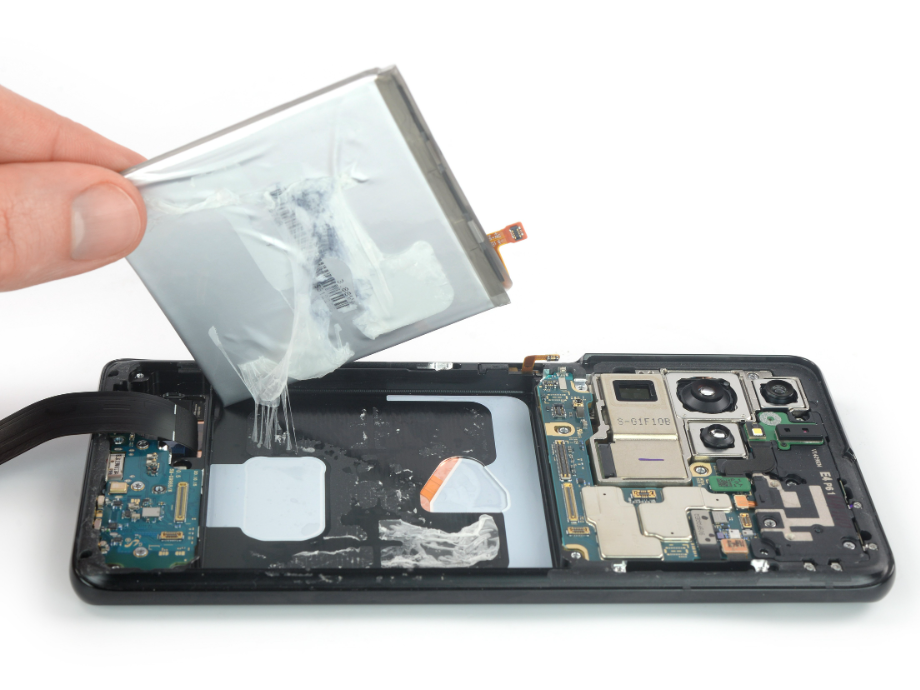
The most significant barrier to repair is the pervasive use of adhesives and chemical bonding. While glue allows for thinner devices and faster assembly, it makes repair destructive and dangerous. This not only obstructs repair but also makes recycling of materials extremely difficult, if not impossible.
- Solution: Replace glue with standardized mechanical fasteners (e.g., Torx or Phillips screws).
2. Prioritizing the consumable: The battery
The battery is a chemical consumable with a finite lifecycle. While other components can last decades, every battery is destined to degrade through normal use. Obstructing access with fragile components or permanent adhesives hinders routine maintenance, leading users to prematurely discard perfectly functional hardware as e-waste.
- Solution: Replace permanent adhesives with mechanical clips or stretch-release tabs. Ensure the battery is accessible without removing other components, aligning with the EU’s 2027 mandate for “readily removable” batteries.
3. Radical modularity
Manufacturers often solder multiple components (RAM, SSD, CPU, Charging Ports) onto a single board to save space, creating a “total loss” scenario from a single component failure. High-wear parts must be independently replaceable. Designing for modularity ensures a device can be repaired or even upgraded with better hardware rather than being discarded.
- Solution: Implement modular sub-assemblies where ports, buttons, and memory are mounted on plug-and-play daughterboards. This makes components independently replaceable and allows for future hardware improvements.
4. Fewer and standardized fasteners
While manufacturers often cite “safety” or “security” to justify proprietary screws, these fasteners primarily serve as barriers that force users toward expensive authorized repairs. Treating your device housing as a “Keep Out” sign alienates customers and ensures that minor component failures lead to the landfill. By prioritizing accessibility, you foster a culture of product ownership and repair.
- Solution: Consolidate your BOM to a minimal variety of standard heads. Using a single screw type across the entire chassis simplifies DIY repair and streamlines your assembly lines.
5. Empowering ownership: Transparent documentation & support
A repairable design is only viable if the user has the resources to complete the fix. With Right to Repair legislation, providing access is now a requirement. Successful repair requires a seamless chain: from clear diagnosis and official part procurement to non-destructive reassembly. If one link breaks, the product becomes e-waste.
- Solution: Shift to a culture of transparency. Provide free, high-quality service manuals and sell genuine replacement parts directly to consumers. By framing repair as an encouraged part of the product’s lifecycle, you build brand trust and ensure devices stay in hands, not landfills.

Industry examples of Right to Repair
My recent experience repairing a Nintendo Switch Joy-Con serves as a microcosm for the movement. Using iFixit guides and parts, I navigated a minefield of uncommon screws and hair-thin ribbon cables to replace a dangerously swollen battery and upgrade to TMR joysticks—components that should have been standard from the factory. While the repair was a success, the process was needlessly gatekept by user-hostile assembly choices and a refusal to provide official support. However, a global network of repair enthusiasts is facilitating such fixes and driving legislative change, advocating for your right to truly own your products. This friction is exactly what a growing wave of proactive support is working to eliminate.
Framework: Beyond repair
Framework pushes past simple repair into true upgradability, successfully shrinking the PC box model into a high-performance laptop. Through modular sub-assemblies and plug-and-play daughterboards, users can upgrade ports, keyboards, and even processors as technology evolves. By treating hardware as an evolving platform rather than a static purchase, they’ve created a device that grows better with age instead of becoming obsolete.

Fairphone: The ethical standard
Fairphone proves sustainability requires both repairability and ethical sourcing. Their 10/10 iFixit-rated design enables screen or battery swaps in minutes with a single screwdriver, while their supply chain tracking ensures minerals are conflict-free. Device longevity shouldn’t come at the cost of human rights or environmental devastation.

Microsoft: The redemption arc
Perhaps the most significant sign of change is the proactive support from established leaders. Once known for glue-heavy, unrepairable designs, Microsoft has undergone a radical turnaround. Recent Surface models now feature QR codes for internal components, easily sourced parts, and high repairability scores—proving that even premium, ultra-portable hardware can be made serviceable when the will exists.

Compliance as a competitive edge
As of 2025, global circularity—the percentage of materials powering our economy that are successfully reused, repaired, or recycled rather than newly mined—has plummeted to a record low of 6.9%. Raw material extraction is vastly outpacing our best recycling efforts, and with 70% of global greenhouse gas emissions now tied to material production, repairability is no longer just a PR-friendly “green initiative” but an economic necessity. The Circularity Gap Report reveals a recycling cap—proving that even if we recycled every technically viable material, global circularity would only reach 25%. The most efficient lever we have is longevity. Extending a device’s service life by just a single month delivers the same circularity gains as transitioning a product line to 15% recycled content.
Beyond mitigating regulatory risk, proactive support for Right to Repair legislation is a financial catalyst. The World Economic Forum’s latest analysis of the “circular path to value” highlights lifespan extension—designing durable, high-value products for disassembly—as the definitive way to decouple economic growth from resource consumption. This enables manufacturers to unlock value across four critical dimensions: sustainability, resilience, revenues, and costs. Rather than cannibalizing hardware sales, embracing these laws allows companies to capture new, lucrative revenue streams through official parts, upgrades, and repair ecosystems. It insulates manufacturers against volatile raw material markets, turning legislative compliance into a competitive advantage over the disposable systems of the past.
Right to Repair marks the end of disposable tech—and a new direction for product design
The sell-and-replace model is facing a geopolitical and regulatory reckoning. As Right to Repair mandates take hold, the industry’s reliance on unrepairable black boxes is being dismantled. But the material constraints are even more unforgiving: escalating rare metal shortages, AI-driven RAM scarcity, and fluctuating tariffs have transformed hardware from a disposable commodity into a precious resource. In 2026, providing the parts and documentation to keep existing tech running is the only logical hedge against a global supply chain that simply cannot ship enough new silicon to meet demand.
Consumer expectations have shifted alongside the law. Squeezed by inflation, buyers will no longer tolerate a total loss design on a $2,000 device. If a customer can’t afford your latest flagship—or if you simply don’t have the inventory to sell them one—your official repair ecosystem becomes a vital revenue stream that maintains brand loyalty. By following the modular lead of Framework or Fairphone, you stop designing for the landfill and start building for the long haul. Ultimately, there is a creative joy in this transition that goes beyond the bottom line. We can finally move past the era of identical, boring glass rectangles toward hardware that is repaired, customized, and personally tailored. For manufacturers, this is an invitation to exit the treadmill of redundant yearly SKUs and reinvest those massive R&D resources into solving actual human problems. As a designer and a tech enthusiast, the prospect of building this future is exciting. I’m ready to work toward a world where our devices finally adapt to us, serving our lives as tools we truly own.
Our team used generative AI tools to assist in editing and refining the language in this article. All core ideas, arguments, and conclusions originate from our human authors and have been reviewed and approved by the team.