Global Test and Measurement Manufacturer
Firmware migration for a critical MCU
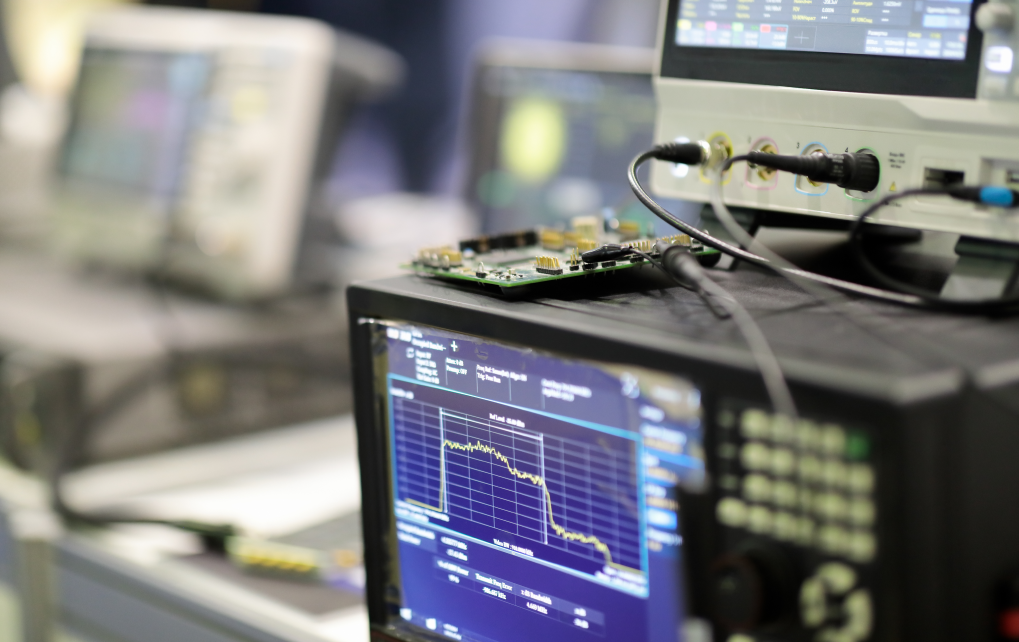
A fast-paced firmware migration to preserve a flagship product
Background
A global test and measurement manufacturer relies on high‑volume, safety‑critical instruments to serve industrial and commercial customers worldwide. When a core microcontroller (MCU) powering several flagship devices approached end‑of‑life, the company needed a low‑risk migration path that preserved metrology‑grade performance while keeping production lines running.
Challenges
- A critical MCU approaching end‑of‑life across several high‑volume product lines
- The existing firmware was tightly optimized to the original silicon and a proprietary, discontinued toolchain
- Any regression in accuracy, precision, or stability would be unacceptable for customers relying on trusted measurements
- Without a completed port, production would stop

Mapping every dependency before touching a line of code
The engagement began with a deep architectural analysis of the existing firmware, cataloging every hardware‑specific dependency and understanding the underlying measurement algorithms. Working closely with the client, the team established clear expectations for equal functionality between the legacy toolchain and modern open‑source alternatives.
This upfront work ensured the replacement firmware wouldn’t just compile on a new MCU: it would match the original product’s performance envelope.
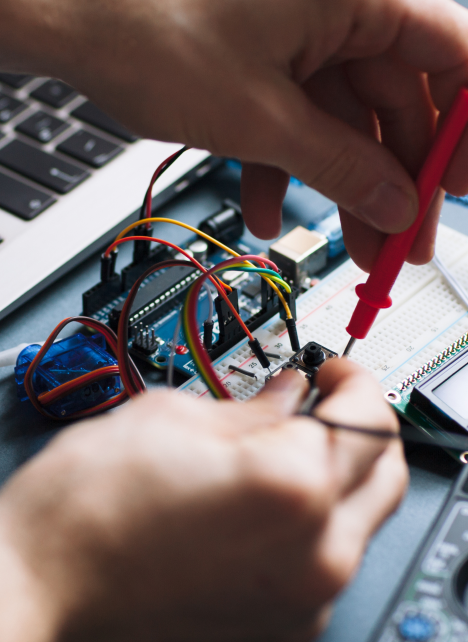
Decoupling application logic from silicon
Rather than porting directly to the new microcontroller, the team first built a Hardware Abstraction Layer. By separating application logic from the underlying hardware, the migration became faster to execute and easier to validate.
The resulting architecture not only supported the immediate port but also positioned the client to adapt more easily to future component changes without rebuilding core firmware.
Porting Strategy: Executing a three‑track firmware migration
Fresh delivered the migration across three coordinated workstreams: firmware port, HAL development, and CI build chain implementation. Every hardware dependency in the existing firmware was remapped to the new device, and the build process was rebuilt from the ground up to replace the discontinued toolchain.
Along the way, the team surfaced and resolved latent issues in the legacy codebase, improving overall robustness and ensuring that the platform was built for future optimization and improvement.


Introducing a modern CI pipeline for embedded firmware
The legacy firmware had no modern build infrastructure. In parallel with the port, the team engineered a CI pipeline that automated builds, introduced consistent quality gates, and standardized the release process.
What began as a necessity for the migration became a long‑term asset, giving the client a reliable, repeatable process for every future firmware update.
Embedded specialists, integrated with the client team
Fresh’s embedded firmware specialists worked in an Agile cadence, delivering testable components continuously to support an aggressive timeline. Embedded within the client’s engineering team, we informed system- and hardware-level decisions, surfaced risks early, and kept parallel workstreams moving toward launch.

Beating the production deadline and avoiding downtime
The work was originally scoped for twelve months, but the team delivered in nine, beating the client’s internal deadline by a full quarter. This schedule meant production never had to pause due to MCU shortages, preventing disruptions across some of the client’s highest‑volume product lines.
Fresh engineers executed the full scope: firmware port, HAL (Hardware Abstraction Layer), CI (continuous integration) pipeline, and codebase remediation.
Measurement integrity & Code Quality
The replacement firmware passed all of the client’s internal validation testing, matching the original product’s performance across measurement accuracy, precision, stability, and signal pre‑processing. Behavioral validation confirmed full functional equivalence, and no regressions were introduced.
During the port, the team uncovered and fixed latent bugs in the original firmware, including issues in signal processing logic, peripheral driver interactions, and memory management. Some defects were already affecting devices in the field; others represented edge cases. Addressing them raised the overall quality of the firmware beyond what had originally shipped.

Creating a reusable framework for future MCU migrations
The HAL, drivers, and CI toolchain built during the engagement have become reusable internal assets for the client. Additional product lines are now being ported using the same framework, with the client reporting significantly less effort than starting from scratch.
What began as a single urgent migration has evolved into the foundation for a broader MCU transition strategy, enabling the client to continue delivering award-winning global test and measurement systems to customers across a range of industries.
The work was originally scoped for twelve months, but the team delivered in nine, beating the client’s internal deadline by a full quarter.
Business continuity: The client maintained continuous production despite the MCU end‑of‑life notice, avoiding lost sales and disruption to high‑volume product lines.
Future‑proof architecture: A modern toolchain and HAL now isolate application logic from hardware, reducing effort for future MCU migrations.
Performance parity: The new firmware met or exceeded original operational and performance specifications, passing all internal validation and behavioral tests with no regressions.
Scalable solution: The porting framework is now an internal asset, enabling rapid migration of remaining product lines that relied on the end‑of‑life MCU.
Need a team to solve an engineering challenge?
Explore our Integrated Engineering Services to learn more about what we can do for you.

